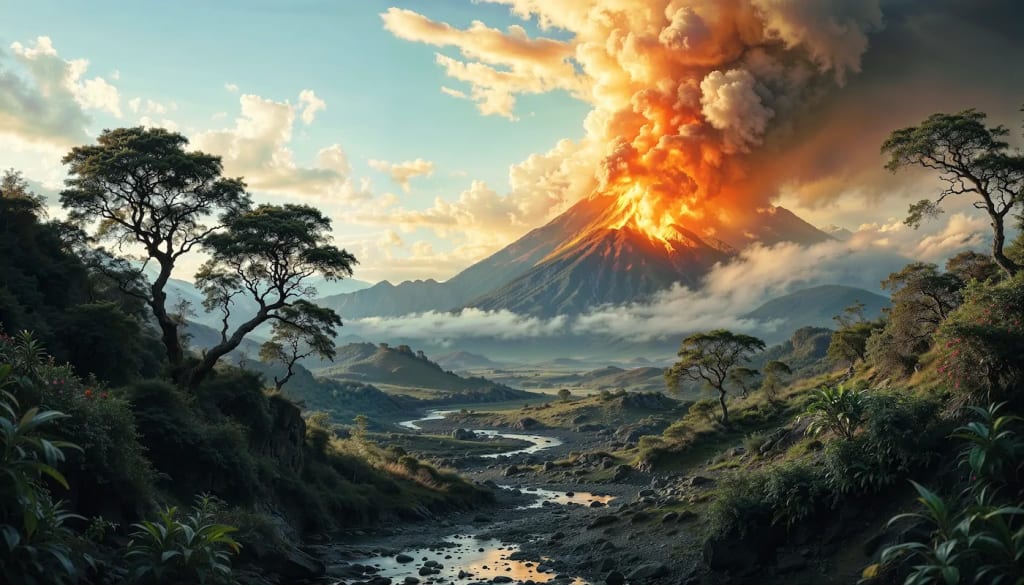
Two centuries ago, an extraordinary geological catastrophe unfolded in remote Indonesia that would fundamentally alter the course of human history. The Mount Tambora 1815 eruption, the most powerful volcanic explosion in recorded human history, didn’t just devastate local communities; it triggered a cascade of global consequences that spawned literary masterpieces, sparked technological innovations, unleashed pandemics, and reshaped entire economies. This Year Without a Summer in 1816 represents perhaps the most vivid example we have of how a single geological event can “break the world,” demonstrating nature’s terrifying capacity to disrupt human civilisation on a planetary scale. From the rain-soaked shores of Lake Geneva where Mary Shelley conceived Frankenstein, to the invention of the bicycle in Germany, to cholera outbreaks that swept across continents, the ripple effects of this volcanic winter in 1816 remind us that in our interconnected world, no corner of the globe is truly isolated from catastrophe.

The quiet giant awakens: Indonesia’s sleeping monster
Before April 1815, Mount Tambora stood majestically on the Indonesian island of Sumbawa, its peak reaching approximately 4,300 metres into the sky, one of the tallest mountains in the Indonesian archipelago. This stratovolcano had been slumbering for centuries, its last major eruption occurring around 1812 with only minor activity. The local population had grown complacent about the mountain that dominated their landscape, unaware that beneath their feet lay one of the planet’s most dangerous volcanic systems.
The geological forces brewing beneath Tambora were extraordinary in scale. The volcano sits at the intersection of the Australian and Eurasian tectonic plates, where oceanic crust is driven deep into the Earth’s mantle. This subduction zone had been building pressure for generations, creating a massive magma chamber filled with volatile gases and molten rock. What made Tambora particularly dangerous was its composition, rich in silica, which creates explosive eruptions rather than the gentler lava flows associated with Hawaiian-style volcanism.
For the inhabitants of Sumbawa and neighbouring islands, life proceeded normally through early 1815. The fertile volcanic soils supported thriving agricultural communities, and the region was home to sophisticated kingdoms including the Sultanates of Tambora and Pekat. These prosperous societies had no way of knowing they were living directly above what would soon become the most catastrophic natural disaster of the modern era. The Mount Tambora 1815 explosion would not only obliterate these civilisations but fundamentally alter the trajectory of global history.
The mountain had shown signs of restlessness in the years preceding the eruption, yet these warnings went largely unheeded. Subtle earthquakes had been recorded since 1812, and locals reported occasional rumblings from deep within the earth. Steam vents had appeared on the mountain’s flanks, releasing sulfurous gases that killed vegetation in localised areas. But without modern geological understanding or monitoring equipment, these omens were interpreted through the lens of local mythology rather than scientific warning systems.
Read more: When the World Broke – Ep. 1: Lisbon earthquake, 1755: The day modernity began under rubble
The communities living on Tambora’s slopes had adapted their lives to the mountain’s presence over countless generations. They terraced its lower slopes for rice cultivation, harvested timber from its forested mid-elevations, and regarded the summit with a mixture of reverence and pragmatic acceptance. The volcano provided everything: fertile soil enriched by ancient ash deposits, building materials, fresh water from its streams, and a defensive position against potential invaders. This intimate relationship with the mountain made the coming disaster all the more tragic.
The eruption that shook the world: April 1815
The catastrophe began on 5 April 1815, when Mount Tambora commenced what volcanologists now recognise as one of the most violent eruptions in recorded history. Initial explosions were heard hundreds of kilometres away, with military officers in Java mistaking the thunderous sounds for cannon fire from distant battles. These preliminary eruptions, while dramatic, were merely the prelude to an apocalyptic crescendo that would unfold five days later.
The climactic explosion occurred on the evening of 10 April 1815, around 7 PM. In a cataclysmic instant, the top third of the mountain simply vanished, blown apart by forces that defied comprehension. The eruption achieved a VEI 7 rating on the Volcanic Explosivity Index, a scale where each number represents a tenfold increase in magnitude. To put this in perspective, the eruption was 100 times more powerful than Mount St. Helens in 1980 and ten times larger than Krakatoa in 1883.
The sheer violence of the explosion ejected approximately 100 to 150 cubic kilometres of material into the atmosphere, creating an eruption column that reached 43 kilometres into the stratosphere, far higher than commercial aircraft fly today. Pyroclastic flows, superheated avalanches of gas, ash, and rock travelling at speeds of up to 200 metres per second, cascaded down the mountain’s slopes, incinerating everything in their path. The flows didn’t stop at the coastline; they surged into the sea, generating tsunamis up to 4 metres high that devastated coastal communities across the region.
The immediate destruction was absolute and terrifying. The kingdoms of Tambora and Pekat were obliterated within minutes, their inhabitants incinerated or buried under more than a metre of volcanic ash. Eyewitness accounts describe a scene of apocalyptic horror: “The whole mountain appeared like a body of liquid fire, extending itself in every direction,” wrote one observer. The darkness caused by falling ash was so complete that people could not see their hands in front of their faces, even at midday.
The eruption continued with varying intensity for several days following the main event. Secondary explosions sent additional pulses of ash and pumice into the atmosphere, while smaller pyroclastic flows continued to sweep down ravines carved by the initial blast. The sound of the eruption was heard as far away as Sumatra, over 2,000 kilometres distant, and the atmospheric pressure wave circled the globe multiple times, registered on barometers in London and Paris.
Survivors from adjacent islands described the sea turning acidic and fish dying in massive numbers, their bodies washing up on shores already buried in grey ash. The ocean surface became choked with floating pumice, forming rafts several metres thick that posed hazards to navigation for months afterward. Ships attempting to sail through the region found themselves grounded on these floating islands of volcanic rock, their hulls scraped and damaged by the abrasive material.
The human toll was staggering. Approximately 71,000 people died as a direct result of the eruption and its immediate aftermath, making it the deadliest volcanic event in recorded history. Entire villages were erased from existence, their locations marked only by depressions in the thick blanket of ash that covered the landscape. The cultural knowledge of the Tambora people, their language, their traditions, their oral histories, all were lost in a matter of hours.
The mechanism of global catastrophe: Understanding volcanic winter
What transformed a regional disaster into a global catastrophe was the massive injection of sulphate aerosols released into the stratosphere by Tambora. The eruption expelled approximately 60 megatons of sulfur dioxide, six times more than the 1991 Mount Pinatubo eruption, which itself caused measurable global cooling. These sulfur compounds quickly reacted with water vapour in the stratosphere to form tiny sulfuric acid droplets that would persist in the upper atmosphere for years.
Unlike ash, which falls to Earth relatively quickly, these microscopic aerosols remained suspended in the stratosphere, where they formed a reflective veil that circled the planet. This aerosol layer acted like a planetary sunscreen, reflecting solar radiation back into space and reducing the amount of sunlight reaching Earth’s surface. The volcanic winter that resulted in 1816 saw global average temperatures drop by 0.4 to 0.7°C, with land temperatures falling as much as 3°C below normal in some regions.
The atmospheric physics of volcanic cooling are both elegant and terrifying in their simplicity. Sulfur dioxide injected into the stratosphere undergoes photochemical reactions, forming sulfuric acid aerosols that scatter incoming solar radiation. Because the stratosphere lacks the weather systems that characterise the troposphere below, these aerosols can persist for several years, creating sustained climatic effects far longer than the eruption itself.
The distribution of aerosols was not uniform across the globe. Stratospheric winds carried the sulfate particles primarily eastward and poleward from the eruption site, with the Northern Hemisphere receiving a disproportionate share of the climate forcing. This uneven distribution helps explain why some regions experienced more severe cooling than others, with middle latitudes in the Northern Hemisphere bearing the brunt of the climatic disruption.
The aerosol veil also altered precipitation patterns in complex ways. By cooling the surface and reducing evaporation rates, the particles disrupted normal moisture transport in the atmosphere. Regions that typically received reliable summer rains found themselves in drought, while others experienced unprecedented flooding. The Asian monsoon system, which sustains billions of people, weakened significantly, with cascading effects on agriculture from India to Southeast Asia.
Modern climate scientists have used the Tambora eruption as a natural experiment to understand how the Earth’s climate system responds to sudden radiative forcing. The event provides crucial data for testing climate models and understanding the potential impacts of geoengineering proposals that would artificially inject aerosols into the stratosphere to combat global warming. The lessons from 1815 suggest that while such interventions might successfully cool the planet, they could also create unpredictable regional climate disruptions with severe consequences for agriculture and water resources.
Ice core data from Greenland and Antarctica preserve a chemical record of Tambora’s aerosol plume, allowing scientists to reconstruct the timing and magnitude of sulfate deposition with remarkable precision. These records show that volcanic sulfate remained detectable in polar ice for nearly five years after the eruption, confirming the long residence time of stratospheric aerosols and their potential for sustained climate impacts.
Europe’s dark summer: When agriculture failed
The Year Without a Summer hit Europe with devastating force in 1816, bringing unprecedented weather that challenged the very foundations of agricultural society. The continent experienced its coldest summer on record between 1766 and 2000, with temperatures that would have been more appropriate for winter than the height of the growing season.

In England, the Central England Temperature series recorded July 1816 as the coldest July on record, a distinction it retains to this day. Snow fell in the Midlands in mid-May, while daytime temperatures resembled those of January and February. The growing season was catastrophically shortened, with some regions recording fewer than 200 growing days compared to the nearly 290 typical for the period.
The agricultural collapse was swift and merciless. Famine and disease swept across the continent as crops failed throughout the crucial summer months. In Switzerland, grape harvests were so delayed that when finally picked in early November, the few surviving grapes were still hard and green. Grain production plummeted across Central Europe, with wheat, oats, and barley crops devastated by unseasonable frosts and lack of sunlight.
Ireland suffered particularly severely, with eight weeks of continuous rainfall destroying potato crops and triggering widespread famine. The failure of subsistence agriculture had cascading effects throughout society, as food price spikes soared beyond the reach of ordinary people. What historian John D. Post termed “the last great subsistence crisis in the western world” had begun, bringing hunger, disease, and social upheaval to millions.
The meteorological mechanisms behind Europe’s misery were complex and interconnected. The sulfate aerosols from Tambora disrupted normal weather patterns, weakening the Asian and African summer monsoons and altering atmospheric circulation over the North Atlantic. This led to more frequent low-pressure systems and a stronger westerly airflow, bringing cool, wet conditions that persisted throughout what should have been the warmest months of the year.
Agricultural communities found themselves facing impossible choices. With current crops failing, farmers had to decide whether to plant for the next season or conserve their remaining seed stock for food. Many regions experienced complete harvest failures, with fields producing less than 10% of normal yields. The situation was exacerbated by plant diseases that thrived in the cool, damp conditions, with potato blight and wheat rust spreading unchecked through weakened crops.
Urban populations faced shortages as rural food supplies dwindled. Bread prices tripled in many cities, sparking riots and civil unrest. Governments struggled to respond effectively, lacking both the resources and administrative frameworks to coordinate relief efforts across national boundaries. The crisis exposed the fragility of early 19th-century food systems and their vulnerability to sustained climatic disruption.
The livestock sector collapsed alongside crop production. With hay and grain supplies depleted, farmers could not feed their animals through the winter. Mass slaughters occurred in autumn 1816, glutting markets with meat that could not be preserved or distributed effectively. By spring 1817, breeding stocks had been so depleted that recovery would take years, creating secondary food shortages even as crop yields slowly improved.
Cultural renaissance born from catastrophe: The literary legacy
The gloomy, rain-soaked summer of 1816 created an unlikely catalyst for some of the most enduring works of literature in the English language. When 18-year-old Mary Godwin (later Shelley) travelled to Switzerland with her lover Percy Bysshe Shelley and her stepsister Claire Clairmont, they were seeking the romantic escape of a lakeside holiday. Instead, they found themselves trapped indoors by the relentless cold and rain caused by volcanic aerosols thousands of miles away.
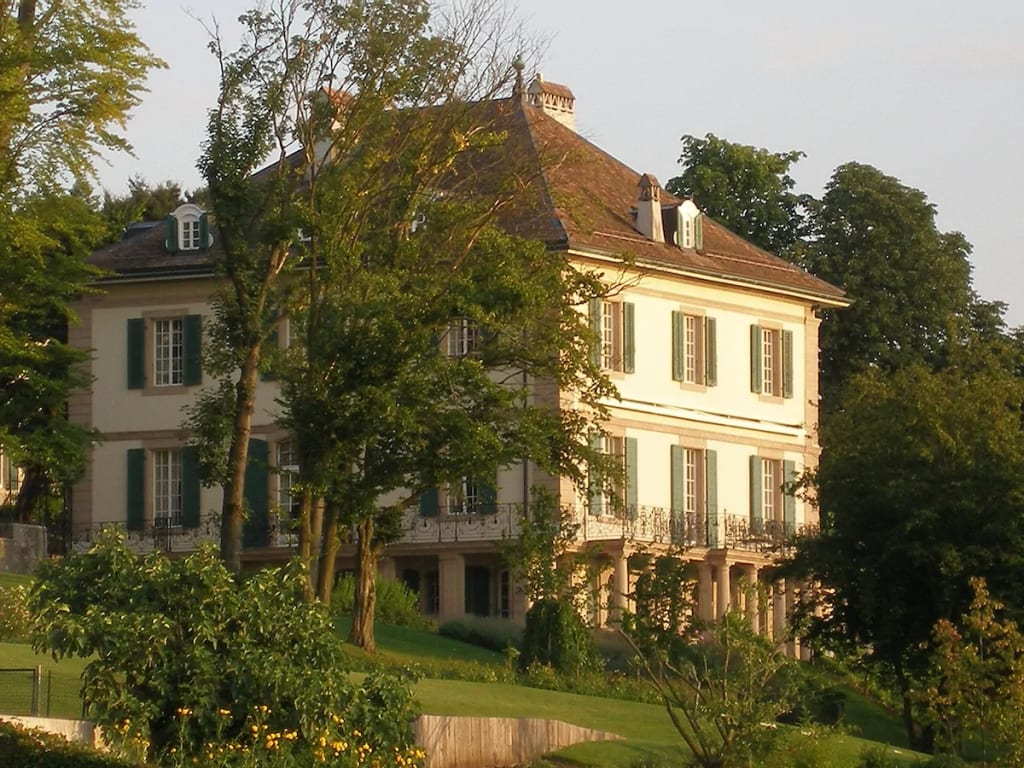
At the Villa Diodati on the shores of Lake Geneva, the group joined the infamous poet Lord Byron and his physician John Polidori for what was supposed to be a summer of outdoor pursuits. The cultural impact of Tambora proved transformative when the unseasonable weather confined them to the villa for days at a time. As Mary Shelley later recalled in her 1831 preface to Frankenstein: “It proved a wet, ungenial summer, and incessant rain often confined us for days to the house.”
The enforced confinement led Byron to propose a ghost story competition among his guests. While the others struggled with their tales, Mary found herself listening to Percy and Byron’s conversations about galvanism, the then-revolutionary idea that electricity could reanimate dead tissue. On the night of 16 June 1816, she experienced the vivid dream that would become Frankenstein, envisioning “the pale student of unhallowed arts kneeling beside the thing he had put together.”
Mary Shelley’s Frankenstein emerged directly from this volcanic summer, its themes of scientific hubris and uncontrolled creation resonating with the environmental chaos unfolding around the world. The novel’s subtitle, “The Modern Prometheus,” deliberately evoked the mythological figure who stole fire from the gods, a fitting metaphor for humanity’s relationship with the natural forces that could devastate civilisation without warning.
The literary legacy of that summer extended beyond Frankenstein’s creation. The novel explored questions that remain strikingly relevant today: What are the limits of scientific ambition? Who bears responsibility when human intervention in natural processes produces catastrophic results? Can we control the forces we unleash, or are we doomed to be destroyed by our own creations? These themes gained particular poignancy against the backdrop of a world disrupted by volcanic forces beyond human control.
Byron himself channelled the apocalyptic atmosphere into his haunting poem “Darkness,” written in July 1816. The poem’s opening lines, “I had a dream, which was not all a dream. The bright sun was extinguish’d,” captured the eerie quality of the ash-darkened skies that had inspired it. Byron wrote of this “celebrated dark day, on which the fowls went to roost at noon, and the candles were lighted as at midnight,” perfectly describing the atmospheric conditions caused by Tambora’s aerosols.
The poem progresses through increasingly disturbing visions of civilisation’s collapse in the absence of sunlight. Byron describes cities burning to provide light and warmth, social order disintegrating into violence, and ultimately the extinction of all life on Earth. While clearly a work of imagination, the poem drew directly from the observable reality of 1816’s abnormal darkness and cold, transforming meteorological observation into apocalyptic vision.
Polidori’s contribution to the ghost story challenge, while less celebrated than Frankenstein, proved historically significant in its own right. His tale “The Vampyre” introduced the aristocratic vampire to English literature, establishing conventions that would influence Bram Stoker’s Dracula and countless subsequent works. The character of Lord Ruthven, Polidori’s vampire protagonist, was widely understood to be a satirical portrait of Byron himself, adding personal drama to literary innovation.
The confinement at Villa Diodati also produced volumes of correspondence that provide invaluable historical documentation of the period’s atmospheric conditions. Letters written by the inhabitants describe the unnatural quality of the light, the persistent cold, and the psychological impact of being trapped indoors during what should have been the finest season for outdoor activity. These accounts complement scientific records of the period, adding human texture to climatological data.
Turner’s volcanic sunsets: Art as climate record
The cultural impact of Tambora extended beyond literature to the visual arts, where painters unknowingly documented the atmospheric changes caused by volcanic aerosols. J.M.W. Turner, England’s master of atmospheric effects, captured the spectacular sunsets created by the light-scattering properties of stratospheric particles in a series of paintings that now serve as inadvertent climate records.

Turner’s paintings from the post-Tambora period show a marked shift in palette, with intensely red and orange skies that modern atmospheric physicists recognise as characteristic of volcanic aerosol effects. The microscopic sulfuric acid droplets suspended in the stratosphere scattered blue light while allowing red and orange wavelengths to pass through, creating the ethereal, intensely coloured sunsets that Turner captured with remarkable accuracy.
Contemporary research has demonstrated that the ratio of red to green pigments in Turner’s sunset paintings correlates closely with the actual levels of volcanic aerosols in the atmosphere, regardless of his artistic style or school of painting. These “volcanic sunsets” provide valuable data for climate scientists studying historical atmospheric conditions, proving that great art can serve as an unexpected source of scientific information.
The broader artistic community responded to the changed atmospheric conditions in ways that reflected the underlying anxiety of the period. The Romantic movement, with its emphasis on the sublime power of nature and humanity’s vulnerability to forces beyond its control, found perfect expression in the otherworldly conditions created by Tambora’s aftermath.
Turner’s contemporaries also documented the unusual atmospheric phenomena, though often with less technical accuracy. German landscape painters working in the Alps captured the strange light qualities that filtered through the aerosol layer, producing works with an almost dreamlike haziness. Dutch maritime painters recorded unusually dark and turbulent seas, reflecting the disrupted weather patterns that affected North Atlantic shipping routes.
The impact extended to colour technology itself. Paint manufacturers of the period struggled to reproduce the intense hues artists observed in nature, leading to experimentation with new pigments and binding media. The challenge of capturing these unprecedented visual effects drove innovations in artistic materials that would influence painting techniques for decades to come.
Innovation born from crisis: The invention of the bicycle
Perhaps the most unexpected consequence of the Mount Tambora 1815 eruption was the invention of the bicycle, a technological innovation that would eventually revolutionise human mobility. The chain of causation was neither obvious nor immediate, but it demonstrates how environmental disasters can trigger human ingenuity in unexpected ways.
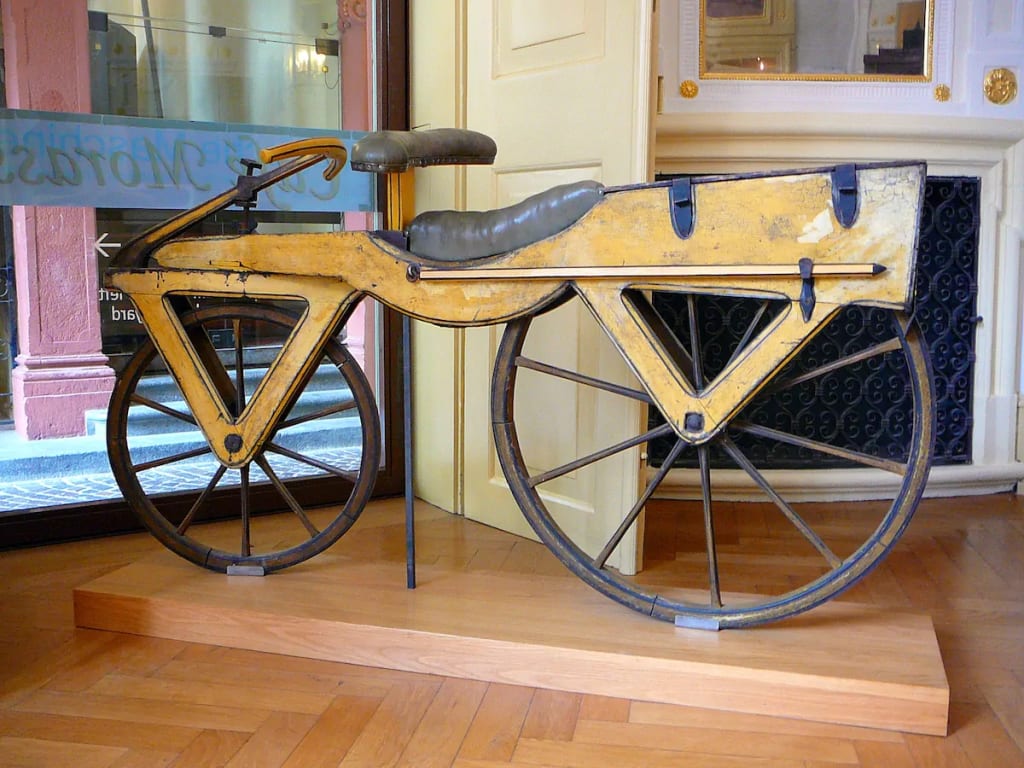
The connection lay in the collapse of agricultural systems across Europe and North America. As crops failed and food became scarce, horses, which required substantial amounts of oats and hay to survive, became an unaffordable luxury for many. The widespread death of horses created a transportation crisis that demanded innovative solutions. In Germany, Baron Karl Drais witnessed the devastating effects of the Year Without a Summer on his country’s equine population and began contemplating alternatives to horse-drawn transport.
On 12 June 1817, exactly two years after Tambora’s climactic eruption, Drais conducted the first recorded journey on his Laufmaschine (running machine), later known as the draisine or “dandy horse.” This wooden, two-wheeled vehicle featured a padded seat, handlebars for steering, and no pedals; riders propelled themselves by pushing their feet against the ground. The origin of the bicycle invention can be directly traced to the environmental pressures created by Tambora’s disruption of agricultural systems.
Drais’s inaugural journey covered approximately seven kilometres from Mannheim to a nearby village in less than an hour, demonstrating the practical potential of human-powered transport. The invention quickly gained popularity among the aristocracy and upper classes, though its use was often restricted in urban areas due to safety concerns. While the immediate popularity of the draisine was short-lived, it established the fundamental principles of two-wheeled, human-powered transport that would eventually evolve into the modern bicycle.
The economic implications were immediately apparent: a draisine cost around 20 pounds, while a horse cost 1,900 pounds. Beyond the initial purchase price, unlike horses, the mechanical device required no feeding, stabling, or veterinary care. This technological innovation, born from the crisis of the volcanic winter in 1816, represents one of history’s clearest examples of how environmental pressures can drive human ingenuity.
Drais’s invention faced both enthusiasm and resistance. Urban authorities worried about pedestrian safety as riders careened down cobblestone streets at speeds previously associated only with horses. Several German cities banned the devices from sidewalks, while others restricted their use to designated areas. These early regulatory debates foreshadowed modern discussions about personal mobility devices in urban spaces.
The social implications were equally complex. The draisine became a status symbol among young aristocrats, who competed in races and demonstrations of skill. Critics dismissed it as a frivolous toy, yet practical-minded observers recognised its potential for rapid personal transport. Newspapers of the period featured both glowing reports of the machine’s capabilities and satirical cartoons mocking its riders.
Technical improvements came rapidly as craftsmen experimented with different designs. Some added braking mechanisms, others tried various steering geometries, and a few attempted to add mechanical advantage through primitive gearing systems. While none of these early modifications achieved commercial success, they established a culture of iterative design that would characterise bicycle development throughout the 19th century.
The draisine’s influence extended beyond Germany. British and French versions appeared within months, each adapted to local preferences and manufacturing capabilities. American inventors also took note, though the rough conditions of frontier roads limited initial adoption in the New World. The global spread of the concept demonstrated how a technological solution to a localised problem could gain universal appeal.
The cholera connection: Disease in a disrupted climate
The most devastating long-term consequence of the Mount Tambora 1815 eruption may have been its role in triggering the first global cholera pandemic of the modern era. The connection between a volcanic eruption in Indonesia and a disease outbreak in Bengal demonstrates the complex ways that climate disruption can create cascading public health crises across vast distances.
The mechanism was subtle but deadly. Tambora’s sulfate aerosols disrupted the Asian monsoon system, the world’s largest weather pattern, for two consecutive years. The monsoons, which normally bring life-giving rains to the Indian subcontinent, arrived late and with altered patterns in 1816 and 1817. This created a sequence of drought followed by unseasonal flooding that fundamentally altered the microbial ecology of the Bay of Bengal.
Cholera had long been endemic to Bengal, but the bizarre weather patterns triggered by Tambora created conditions that allowed the bacterium to mutate into a new, more virulent strain. The cholera bacterium’s unusually adaptive genetic structure made it highly sensitive to environmental changes, and the disrupted aquatic environment of the Bengal delta proved to be the perfect breeding ground for a pandemic strain that local populations had no immunity against.
The new cholera variant first appeared in 1817 and spread with terrifying speed across Asia. Within months, it had consumed 10,000 soldiers in Lord Hastings’ British army in India. By 1819, the disease had reached Myanmar and Thailand; by 1822, it had spread to Iran. The pandemic eventually reached Europe in 1830 and the United States in 1832, becoming one of the defining health crises of the 19th century.
Historians estimate that cholera killed tens of millions of people over the course of the 19th century, fundamentally shaping the development of modern public health institutions and medical science. The Victorian-era battle against cholera drove advances in epidemiology, sanitation, and urban planning that form the foundation of contemporary public health practice. The realisation that a volcanic eruption in Indonesia could trigger a disease pandemic that lasted for decades provides a sobering reminder of how environmental disruption can have consequences far beyond immediate climate effects.
The cholera pandemic’s spread followed trade routes and military movements, illustrating how human connectivity could transform regional health crises into global catastrophes. Pilgrimage routes to Mecca became vectors for disease transmission, carrying cholera from India to the Middle East and North Africa. British imperial trade networks inadvertently facilitated the bacterium’s journey to Southeast Asia and eventually to Europe.
The disease struck with particular savagery in urban areas, where crowded conditions and inadequate sanitation created ideal conditions for transmission. London’s 1854 cholera outbreak, famously traced by Dr. John Snow to a contaminated water pump, became a landmark case study in epidemiology. Snow’s work demonstrated that cholera spread through contaminated water rather than “bad air,” revolutionising understanding of disease transmission.
The pandemic forced governments and municipalities to confront the public health consequences of rapid urbanisation. Cities began investing in comprehensive sewer systems, clean water supplies, and waste management infrastructure. These improvements, while initially motivated by cholera prevention, produced broader health benefits by reducing transmission of numerous waterborne diseases.
Medical understanding evolved rapidly in response to the crisis. Early theories about cholera’s causes ranged from dietary imbalances to atmospheric miasmas, but accumulating evidence gradually pointed toward a waterborne pathogen. The eventual identification of Vibrio cholerae by Italian anatomist Filippo Pacini in 1854 (though his work went largely unrecognised until later) and German physician Robert Koch in 1883 provided definitive proof of the bacterial agent.
Economic collapse and recovery: The global market response
The Mount Tambora 1815 eruption triggered the world’s first truly global economic crisis, demonstrating how environmental disasters in the pre-industrial era could still generate economic shockwaves that reverberated across continents. The crisis began with agricultural collapse but quickly spread through interconnected trade networks, creating patterns of boom and bust that would define economic cycles for years to come.
In Europe, grain prices increased by 300 to 400% above pre-eruption levels, while oatmeal prices in the United States soared by nearly 800%. These price increases reflect not just scarcity, but the breakdown of normal distribution systems as transportation networks struggled to cope with widespread crop failures. The situation was exacerbated by speculative trading, as merchants hoarded grain in expectation of further price increases.
The economic effects varied dramatically by region. Grain-producing areas that managed to maintain some production initially benefited from sky-high prices, leading to speculative investment in agricultural land across the American Midwest. However, when European harvests recovered in 1818 and 1819 and global grain prices collapsed, the speculative bubble burst with devastating consequences.
The resulting economic depression, known as the Panic of 1819, was the first sustained economic downturn in United States history. Banks failed, businesses collapsed, and unemployment soared as the economy adjusted to the new reality of volatile global commodity markets. Thomas Jefferson wrote of “such hard times” and Americans “in a condition of unparalleled distress” that persisted well into the 1820s.
The crisis also accelerated westward migration in the United States, as families ruined by crop failures in New England sought new opportunities on the frontier. This mass migration contributed to territorial expansion and the development of transportation infrastructure, including canals and roads that would prove crucial for America’s economic development in the following decades.
Financial systems proved inadequate to handle the scale of the crisis. Banks that had extended credit during the boom years found themselves overexposed when agricultural values collapsed. The Second Bank of the United States attempted to stabilise markets by contracting credit, but this deflationary policy worsened unemployment and foreclosures. The crisis exposed fundamental weaknesses in early American financial regulation and prompted debates about federal banking policy that would continue throughout the 19th century.
International trade networks experienced severe disruption. British manufacturers found their export markets evaporating as continental Europe grappled with famine and economic distress. Colonial economies dependent on raw material exports to Europe suffered collateral damage as demand collapsed. The crisis demonstrated that globalisation, even in its early 19th-century form, created mutual vulnerabilities that could amplify regional disasters into worldwide recessions.
The recovery process was slow and uneven. European agriculture gradually adapted to more variable growing conditions, with farmers adopting crop varieties better suited to cooler, wetter summers. Agricultural insurance schemes began to emerge, providing farmers with some protection against future harvest failures. These institutional innovations, born from the crisis, helped build resilience into food systems that would prove valuable in subsequent climate disruptions.
Social consequences extended far beyond pure economics. The crisis triggered urban unrest in several European cities, with food riots and protests against high prices. Governments responded with a mixture of repression and relief efforts, establishing precedents for state intervention during subsistence crises. The experience helped shape emerging theories about government responsibility for public welfare during economic emergencies.
Lessons for the modern world: Volcanic risk in a connected age
The Mount Tambora 1815 eruption provides crucial insights for understanding volcanic risk in our contemporary, hyper-connected world. While VEI 7 eruptions occur roughly once every 500 to 700 years, the increasing complexity and interdependence of global systems means that a similar event today could have far more severe consequences than the 19th-century disaster.
Modern climate scientists estimate that a Tambora-scale eruption today could disrupt global food systems far more severely than the 1815 event. Our current agricultural system depends on just-in-time supply chains, genetic monocultures, and globalised trade networks that leave little room for the kind of multi-year disruptions that Tambora created. A volcanic winter lasting two to three years could trigger food shortages affecting billions of people.
The 2010 eruption of Eyjafjallajökull in Iceland, a relatively modest VEI 4 event, demonstrated how even moderate volcanic activity can paralyse global transportation systems. The ash cloud closed European airspace for six days, stranding millions of passengers and causing economic losses of over $5 billion. A VEI 7 eruption could potentially disrupt air travel for months or years, with cascading effects on global trade and communications.
Our increasing reliance on satellite communications and electronic systems also creates new vulnerabilities. The sulfuric acid aerosols from a major eruption could damage satellite components and disrupt GPS systems, affecting everything from financial markets to precision agriculture. The potential for cascading system failures in our technologically dependent civilisation is far greater than anything faced by 19th-century societies.
However, we also possess capabilities that earlier generations lacked. Modern volcanic monitoring systems can provide warnings of impending eruptions, though the lead time for catastrophic events may still be measured in days or weeks rather than months. Climate models allow us to predict the atmospheric effects of major eruptions with reasonable accuracy, potentially enabling better preparation for agricultural disruption.
The parallels between volcanic winter and contemporary climate anxiety become apparent when considering how both involve long-term environmental disruption requiring societal adaptation. Just as 19th-century communities struggled to comprehend multi-year climatic changes caused by atmospheric aerosols, modern societies grapple with understanding gradual shifts driven by greenhouse gas accumulation. The key difference lies in timescale: volcanic winters unfold over years, while anthropogenic climate change operates over decades and centuries.
Contemporary discussions around net zero emissions targets and climate mitigation strategies can benefit from studying how societies responded to Tambora’s disruption. The eruption demonstrated that even temporary atmospheric changes can trigger cascading consequences lasting far longer than the initial forcing. This insight suggests that climate interventions, whether through emissions reduction or potential geoengineering, must account for complex system responses that may persist long after implementation.
Volcanic monitoring networks have expanded dramatically since 1815, with satellite surveillance, seismic sensors, and gas emission detectors providing real-time data on potentially dangerous volcanoes. Yet prediction remains challenging. Many volcanoes show signs of unrest for years without erupting, while others can transition from dormancy to catastrophic explosion in weeks or months. The investment in monitoring infrastructure reflects recognition that prevention is impossible, but preparation can save lives.
Preparing for the next catastrophe: Building resilience
The lessons of the Year Without a Summer suggest several strategies for building resilience against future volcanic disruption. First, diversifying global food systems to reduce dependence on climate-sensitive regions could help buffer against regional crop failures. This includes developing crop varieties that can tolerate cooler temperatures and reduced sunlight, as well as building strategic food reserves that could sustain populations through multi-year disruptions.
Second, improving international cooperation and communication systems could help coordinate responses to global crises more effectively than was possible in the 19th century. The rapid spread of information about volcanic eruptions and their effects could enable faster adaptation and mutual aid between affected regions.
Third, investing in research on volcanic prediction and impact assessment remains crucial. While we cannot prevent volcanic eruptions, we can improve our understanding of their likely effects and develop more effective strategies for minimising their impact on human societies.
The story of Mount Tambora also highlights the importance of maintaining technological and social resilience. The invention of the bicycle emerged from necessity when traditional transportation systems failed, reminding us that human ingenuity often flourishes in response to crisis. Building societies that can adapt and innovate under pressure may be our best defence against future environmental catastrophes.
Agricultural research institutions have begun exploring “volcanic winter crops” that could maintain productivity under conditions of reduced sunlight and cooler temperatures. These breeding programs focus on traits like cold tolerance, short growing seasons, and efficiency in low-light conditions. Root vegetables, certain grains, and greenhouse cultivation emerge as particularly promising approaches for maintaining food security during extended periods of climatic disruption.
Economic resilience requires rethinking just-in-time supply chains that optimise for efficiency at the cost of redundancy. Strategic stockpiles of essential commodities, diversified supplier networks, and regional self-sufficiency in critical goods could help buffer against the kind of cascading supply chain failures that exacerbated the 1816 crisis. The challenge lies in balancing economic efficiency with disaster preparedness in politically and economically fragmented world.
Social resilience depends on maintaining institutions capable of coordinating collective action during crises. The breakdown of social order during the Year Without a Summer stemmed partly from inadequate mechanisms for distributing scarce resources and managing conflicts over survival necessities. Modern societies possess more sophisticated governance structures, but face new challenges related to misinformation, political polarisation, and erosion of trust in institutions.
Conclusion: When the world broke and humanity adapted
The Mount Tambora 1815 eruption stands as one of history’s most powerful demonstrations of how a single natural event can reshape human civilisation. From the ash-darkened skies that inspired Mary Shelley’s Frankenstein to the cholera pandemic that killed millions, from the invention of the bicycle to the economic depression that reshaped American society, the eruption’s effects touched virtually every aspect of human experience in the early 19th century.

Perhaps most remarkably, the Tambora catastrophe reveals both humanity’s profound vulnerability to environmental disruption and our extraordinary capacity for adaptation and innovation. The Year Without a Summer brought unprecedented suffering, but it also sparked cultural achievements that continue to resonate today and technological innovations that transformed human mobility.
As we face the challenges of climate change and increasing environmental instability in the 21st century, the lessons of Tambora remain strikingly relevant. The eruption demonstrates how environmental changes can trigger cascading effects across interconnected human systems, creating consequences far removed from the initial cause. It shows how local environmental disasters can become global catastrophes through atmospheric and economic connections that span continents.
Most importantly, Tambora reminds us that environmental resilience is not just about predicting and preventing disasters; it’s about building societies capable of adapting, innovating, and supporting each other when the unthinkable occurs. The volcanic winter of 1816 was a year when the world broke, but it was also a year when humanity showed its remarkable capacity to create beauty, meaning, and progress in the face of catastrophe.
In our current age of environmental uncertainty, the story of Mount Tambora serves as both warning and inspiration. It warns us that nature retains the power to disrupt human civilisation on a global scale, but it also shows us that human creativity and resilience can transform even the darkest times into periods of unprecedented innovation and cultural achievement. When the next great environmental catastrophe strikes, whether volcanic, climatic, or otherwise, we would do well to remember both the terrible power of natural forces and the extraordinary capacity of human societies to adapt, create, and ultimately thrive in the face of seemingly insurmountable challenges.
The legacy of the Mount Tambora 1815 eruption ultimately teaches us that while we cannot control the natural forces that shape our planet, we can choose how we respond to them. In that choice lies both our greatest vulnerability and our most profound strength as a species capable of transforming catastrophe into opportunity, darkness into art, and crisis into innovation.
The physical scar of Tambora remains visible today. The volcano’s summit, once towering over 4,300 metres, now reaches only 2,850 metres, with a caldera six kilometres wide serving as permanent testament to the eruption’s violence. Local communities have rebuilt around the mountain, demonstrating the remarkable human tendency to return to volcanic regions despite their dangers. The fertile soils that made the area attractive before 1815 continue to draw farmers, illustrating the complex relationship between volcanic hazard and agricultural opportunity.
Scientific study of Tambora continues to yield new insights. Recent expeditions have uncovered archaeological evidence of the pre-eruption civilisations buried beneath metres of ash, providing poignant reminders of the human cost of natural catastrophes. Paleoclimatological research using ice cores, tree rings, and historical records continues to refine our understanding of the eruption’s global impacts and their mechanisms.
The intersection of volcanic risk and modern civilisation presents challenges that earlier generations never faced. Our globalised, technologically dependent society enjoys unprecedented prosperity and connectivity, but these same characteristics create new vulnerabilities to large-scale environmental disruption. The Tambora eruption occurred in an era when most communities maintained substantial self-sufficiency; modern populations depend on complex supply chains spanning continents for basic necessities.
Yet we also possess unprecedented tools for understanding and responding to volcanic hazards. Satellite monitoring can detect subtle changes in volcanic activity from space. Atmospheric modelling can predict aerosol dispersion patterns with reasonable accuracy. International cooperation mechanisms, while imperfect, allow for coordinated disaster response in ways impossible two centuries ago. The question is whether these capabilities will prove sufficient when the next VEI 7 eruption occurs.
The story of 1815 and 1816 ultimately reveals that catastrophe and creativity exist in paradoxical relationship. The same conditions that brought famine and disease also inspired enduring literature and practical innovation. This suggests that resilience lies not in preventing all adverse outcomes, but in maintaining the social and intellectual flexibility to find new solutions when circumstances change dramatically. As we face an uncertain environmental future, the memory of Mount Tambora offers both sobering warning and cautious hope for humanity’s capacity to endure and adapt.