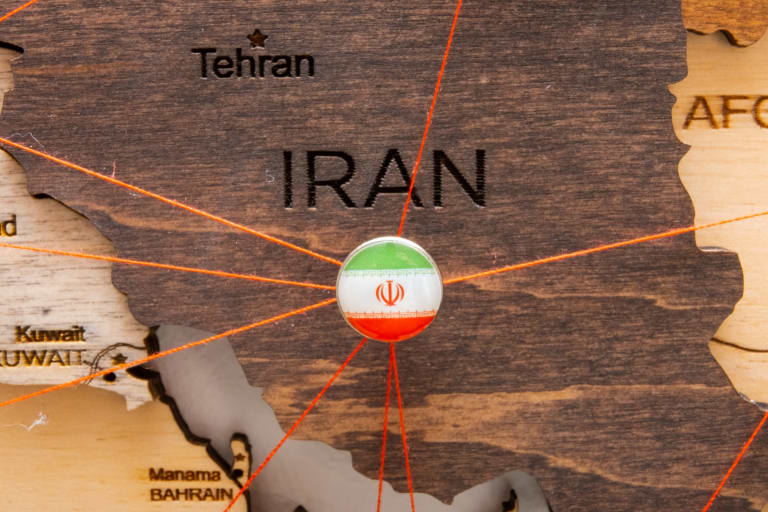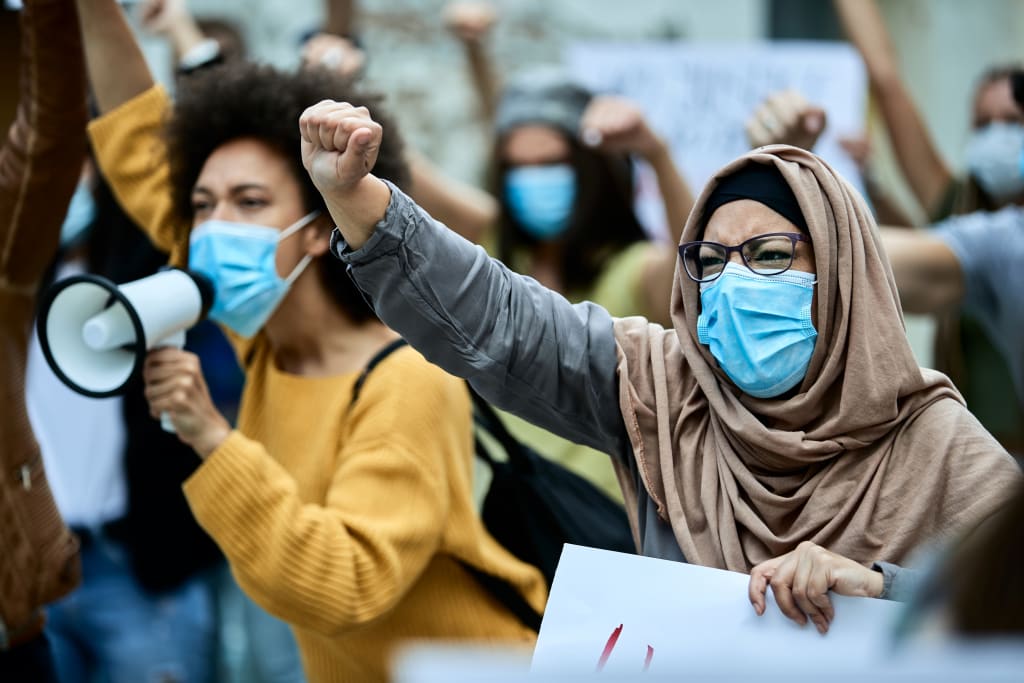
The scenes from Tehran’s streets in early 2026 told a story that hadn’t been written in Iran for decades. Fireworks exploded overhead, horns blared through traffic-clogged boulevards, and young people ran through the avenues, some weeping with joy, others laughing in disbelief. Videos spread across social media platforms at extraordinary speed, documenting something utterly unprecedented in the Islamic Republic: collective, unrestrained celebration spreading from city to city across all thirty-one provinces.
But this wasn’t a national holiday or a football victory. This was relief, raw and visceral, after years of accumulated repression finally finding an outlet. The catalyst for this extraordinary public emotion wasn’t entirely clear from the outside, but those familiar with Iran’s internal dynamics understood immediately. For more than three decades, one figure had presided over a brutal machinery of state control that reached into the most intimate aspects of Iranian life, dictating how women dressed, whom citizens loved, and even how they died.
+ Read more: Iran conflict escalation probability: we asked three AI systems what happens next
The death of Supreme Leader Ayatollah Ali Khamenei marked a watershed moment for a population exhausted by theological tyranny, and the events of Iran 2026 forced the entire international community to confront what had long been allowed to fester in silence. Yet to understand why his passing sparked such jubilation, we must examine the systematic apparatus of oppression that has defined life and death for millions of Iranians, particularly women and LGBTQ+ individuals who have borne the brunt of the regime’s most sadistic policies. This is the story of a theocratic regime’s war on its own people, and the extraordinary human courage that has refused to be extinguished.
Key facts about human rights in Iran
- Iran is one of fewer than ten countries in the world where homosexuality is punishable by death under the law.
- Mahsa Amini, a 22-year-old Kurdish woman, was killed in morality police custody in September 2022 after being arrested for an improperly worn hijab.
- At least 551 protesters were killed during the 2022 Woman, Life, Freedom uprising, including 68 children.
- The 2023 hijab law deploys artificial intelligence and facial recognition to monitor women in public spaces.
- Iran leads the world in executing individuals for crimes committed while they were under eighteen years old.
- More than 53,000 people have been arrested in connection with recent protests as of February 2026.
- Under Iranian law, a woman’s testimony in court is worth exactly half that of a man’s.
The Mahsa Amini case: When a headscarf becomes a death sentence
On 13 September 2022, a twenty-two-year-old Kurdish woman named Mahsa Jina Amini travelled with her family to Tehran for what should have been an ordinary visit to Iran’s sprawling capital. She wasn’t attending a political rally. She wasn’t distributing protest literature or organising dissent. She was simply existing as a young woman in the Islamic Republic of Iran and that, as it turned out, was dangerous enough.
The Guidance Patrol, better known internationally as Iran’s morality police (Gasht-e Ershad), stopped Mahsa because several strands of hair had escaped from her hijab, the mandatory Islamic headscarf that every Iranian woman must wear from the age of nine. For this “violation,” she was arrested and taken to a detention centre for “re-education,” a euphemistic term for what witnesses described as something far more sinister. Her crime, in the eyes of the regime, was not an act of protest or political defiance. It was the simple, involuntary act of being a woman whose hair was visible.
What happened next remains disputed by Iranian authorities, who claim Mahsa suffered from pre-existing heart conditions. Eyewitnesses paint a sharply different picture: brutal beatings by morality police officers, trauma severe enough to cause catastrophic brain injury, and a young woman collapsing under the violence. Three days later, just before what would have been her twenty-third birthday, Mahsa Amini was dead. The Iranian Kurdistan Human Rights Watch confirmed that her family disputed the official account from the very beginning, and medical personnel who treated her provided testimony that contradicted the government’s narrative in multiple details.
Her death became the catalyst for the most significant protest movement in Iran since the 1979 Islamic Revolution. Under the rallying cry “Woman, Life, Freedom” (Zan, Zendegi, Azadi), thousands of women marched through public squares, cut their hair in acts of defiant mourning, and burned their hijabs in front of heavily armed riot police. The demonstrations spread from Mahsa’s hometown of Saqqez to at least sixteen provinces across Iran, encompassing cities both large and small. What began as grief transformed rapidly into something the regime had not seen in a generation: a population willing to look the security apparatus directly in the face and refuse to back down.
The government’s response was predictably brutal. Security forces deployed tear gas, live ammunition, and what human rights investigators later described as a deliberate strategy to maim protesters by shooting at their eyes, faces, and genitals. According to Iran Human Rights, at least 551 protesters were killed during the demonstrations, including 68 children. More than 20,000 people were arrested, many subjected to torture, sexual violence, and forced confessions broadcast on state television.
The crackdown didn’t end with the suppression of street protests. In a chilling escalation, the Islamic Republic began executing protesters, with at least seven individuals hanged in connection with the demonstrations by spring 2023. Twenty-three-year-old Mohsen Shekari became the first, executed on 8 December 2022 on charges of “enmity against God” for allegedly blocking a road and wounding a police officer. His trial lasted mere hours, with no due process or independent legal representation. The speed and casualness of his execution sent a message the regime intended to be heard by every Iranian who had considered joining a protest.

The legal architecture of gender apartheid
To comprehend how a state reaches the point where it murders its own citizens over hair coverage, we must examine the legal and ideological foundations of the Islamic Republic and how gender apartheid became encoded into every layer of Iranian society.
Before 1979, Iran under Shah Mohammad Reza Pahlavi was undergoing rapid Westernisation. Despite the Shah’s authoritarian tendencies, women enjoyed expanding freedoms. They attended university without veils, wore Western-style clothing, voted, held professional positions, and participated actively in public life. Iranian cities were places where women walked freely, studied openly, and built careers in medicine, law, academia, and the arts. These freedoms were imperfect and unevenly distributed, but they existed and they were growing.
The 1979 Islamic Revolution, led by Ayatollah Ruhollah Khomeini, reversed these gains virtually overnight. One of Khomeini’s first acts upon seizing power was to revoke women’s rights systematically. The new regime mandated that all women, starting from age nine, must cover their hair and wear loose-fitting clothing to conceal their bodies. Violations carried severe penalties: hefty fines, imprisonment, torture, or execution.

This wasn’t merely about dress codes. The Islamic Republic transformed Iranian women into second-class citizens through a comprehensive legal framework based on Sharia law. Under the Iranian judicial system:
In testimony: A woman’s courtroom testimony is worth exactly half that of a man’s. In cases requiring witness corroboration, two women are needed to equal one male witness.
In inheritance: Daughters receive half the share that sons inherit. This applies regardless of financial need, merit, or the deceased’s wishes.
In marriage and divorce: Men possess unilateral divorce rights and can marry up to four permanent wives plus unlimited “temporary marriages” (sigheh). Women require their husband’s permission to divorce and typically lose custody of children, sons after age two and daughters after age seven.
In criminal responsibility: Girls reach the age of criminal responsibility at nine lunar years (approximately 8.5 solar years), while boys aren’t considered criminally responsible until age fifteen. This means prepubescent girls can face adult criminal penalties, including execution, for actions deemed crimes under Islamic law.
In public space: Women cannot appear in public without proper hijab. They face restrictions on employment, education, travel, and social activities. Many professions remain de facto closed to women, and universities have implemented gender quotas limiting female enrolment in certain fields.
The United Nations Fact-Finding Mission on Iran concluded in March 2024 that these systematic discriminations constitute “persecution on the grounds of gender,” a crime against humanity. The Mission found that Iranian authorities have “committed a series of extensive, sustained and continuing acts that individually constitute human rights violations, directed against women and girls and, cumulatively, constitute what the mission assesses to be persecution.” The language is deliberate and carries enormous legal weight: persecution on the grounds of gender sits within the category of crimes against humanity under international law, binding all states to a duty of response.
The escalation: When systematic oppression becomes extermination
Following the 2022 protests, rather than addressing the grievances that sparked the uprising, the Iranian government intensified its repression. In September 2023, parliament approved the “Law on Protection of the Family Through Promotion of the Culture of Chastity and Hijab,” a dystopian piece of legislation that essentially declared war on Iranian women’s bodily autonomy.
This law, finalised in December 2024 after temporary delays, contains seventy-four articles that collectively create what human rights organisations have called “a comprehensive system of gender apartheid.” Key provisions include:
Enhanced surveillance: The law authorises the use of artificial intelligence, facial recognition technology, and CCTV cameras to identify women who violate hijab requirements. Women receive automated text messages accusing them of “improper veiling” based on licence plate recognition systems. The surveillance infrastructure extends from major city centres to smaller provincial towns, creating a nationwide monitoring web that functions without any human presence in the street.
Escalating punishments: Fines reach astronomical levels, up to 360 million rials (approximately £6,500), equivalent to several months’ salary for average Iranians. Prison sentences extend to ten years for repeat offences. Flogging remains an option for judges.
Socioeconomic exclusion: Women who defy hijab laws face bans from employment, education, healthcare services, public transportation, and government assistance. Their vehicles can be confiscated. They can be prohibited from leaving the country. This combination of penalties amounts to the deliberate dismantling of a woman’s capacity to exist as an independent person in society, which is precisely the point.
Third-party liability: Businesses, institutions, and even social media platforms face heavy penalties for failing to enforce hijab compliance. This effectively deputises the entire society as enforcers of the morality code, turning employers, teachers, shopkeepers, and transport workers into agents of surveillance.
Immunity for enforcers: Perhaps most insidiously, the law grants blanket immunity to security forces and vigilantes who attack women for hijab violations. Article 59 specifically protects those carrying out their “religious obligation” to enforce veiling. Anyone attempting to prevent such attacks faces imprisonment or fines themselves.
Diana Eltahawy, Amnesty International’s Deputy Regional Director for the Middle East and North Africa, described the law as one that “intensifies the persecution of women and girls for daring to stand up for their rights following the ‘Woman Life Freedom’ uprising. The authorities are seeking to entrench the already suffocating system of repression against women and girls while making their daily lives even more intolerable.”
What makes this legislative escalation particularly significant is its timing. The regime did not introduce these measures from a position of confidence. It introduced them in direct response to a protest movement that had shaken its foundations. Rather than signal strength, the extreme severity of the new law revealed the depth of the regime’s fear.
The horror behind prison walls: Virginity, rape, and execution
The persecution of women in Iran reaches its most horrifying dimensions within the prison system, where theological interpretations combine with sadistic cruelty to produce outcomes that shock even hardened human rights investigators.
According to Islamic tradition as interpreted by Iranian clerics, a virgin woman who dies will enter paradise. For the theocratic state, this presents an unacceptable outcome when dealing with female political prisoners condemned to death. The regime’s solution reveals the depths of its depravity: systematic rape of virgin prisoners the night before their execution.
Former prisoners and human rights organisations have documented this practice extensively. Young women arrested for political activities, protest participation, or moral violations are subjected to what amounts to state-sanctioned sexual torture specifically designed to rob them of their virginity before they’re sent to the gallows the following morning. Prison guards and security personnel carry out these rapes not as isolated acts of individual violence, but as policy, an institutionalised practice justified through theological reasoning and sanctioned at the institutional level.
This isn’t ancient history or unverified rumour. Survivors who escaped Iran have provided detailed testimonies. International investigators have corroborated accounts through multiple independent sources. The practice continued through the 2022 protests and their aftermath, with credible reports emerging of sexual violence against detained demonstrators. The United Nations, Human Rights Watch, and Amnesty International have all documented patterns of sexual violence in Iranian detention facilities, including:
Forced “virginity tests”: Invasive medical examinations performed without consent, often as part of the pre-trial process for women accused of moral crimes. These examinations are carried out by medical professionals operating within a system that has weaponised healthcare against the very people it exists to protect.
Rape and sexual assault: Used systematically as torture methods during interrogation and detention, particularly against political prisoners and protesters. Survivors who managed to leave Iran describe environments in which sexual violence was so normalised among guards that it occurred openly and without any apparent concern about accountability.
Forced pregnancy: Some reports indicate that imprisoned women have been subjected to sexual violence resulting in pregnancies, adding another layer of trauma and control.
Threats against family members: Security forces frequently threaten to arrest and sexually assault female relatives of male prisoners to extract confessions or cooperation.
The psychological impact of living under such a system extends far beyond those directly victimised. Every woman in Iran understands that participating in protests, speaking out against the regime, or simply being in the wrong place at the wrong time could result in arrest, sexual violence, and execution. This creates what scholars of authoritarianism call “anticipatory compliance,” a population that self-censors and conforms out of justified terror, producing the illusion of consent where only fear exists.
The erasure policy: Iran’s war on LGBTQ+ existence
If the Islamic Republic’s treatment of women reveals the brutality of theocratic patriarchy, its policies toward LGBTQ+ individuals demonstrate a systematic campaign of erasure that has few parallels in the modern world. Iran stands among a handful of countries worldwide where homosexuality remains punishable by death, and it actively implements these executions, unlike some other countries where such laws exist primarily on paper.
In 2007, then-President Mahmoud Ahmadinejad delivered a now-infamous speech at Columbia University in New York, during which he stated flatly: “In Iran, we don’t have homosexuals like in your country.” The audience laughed, assuming he was either deeply ignorant or deliberately lying. He was, in fact, describing state policy: the systematic elimination of visible LGBTQ+ existence through a combination of execution, forced medical intervention, and exile. The statement was not an embarrassing gaffe. It was an ideological declaration.
The Islamic Penal Code treats homosexual acts as “crimes against God” (moharebeh) punishable by death. Both male-male and female-female sexual activity carry severe penalties:
For men: Anal intercourse (lavat) is punishable by death for both the active and passive partners if they’re adults. Other same-sex acts between men carry flogging penalties, up to 100 lashes, for the first three offences, with death prescribed for the fourth offence.
For women: Same-sex sexual activity (mosaheqeh) between women carries 100 lashes for the first three offences, with death for the fourth offence.
Lack of consent distinction: Crucially, Iranian law makes no distinction between consensual and non-consensual same-sex activity. This means that rape survivors can be prosecuted alongside their attackers, facing the same punishments as perpetrators of sexual violence.
Human rights organisations estimate that thousands of LGBTQ+ individuals have been executed since the 1979 revolution, though exact figures remain impossible to verify due to the regime’s opacity. Many executions are carried out on pretextual charges, rape, drug trafficking, espionage, rather than openly acknowledging the sexual orientation component, making comprehensive documentation profoundly difficult.
The execution methods themselves reflect deliberate cruelty. Public hangings from construction cranes serve as warnings to the broader population. The regime sometimes invites the victims’ families to participate, adding the trauma of familial rejection to state violence. In some cases, families themselves carry out “honour killings” of LGBTQ+ relatives, secure in the knowledge that Iranian courts will impose minimal or no punishment for such murders.
The “third gender” paradox: When surgery becomes punishment
One of the Islamic Republic’s most bizarre and cruel policies emerges from a 1985 fatwa issued by Ayatollah Khomeini, who ruled that individuals suffering from “gender identity disorder” could undergo sex reassignment surgery. On its surface, this appears progressive, particularly compared to the regime’s treatment of homosexuality. Iran now performs thousands of gender reassignment surgeries annually, more than many Western countries, and has become what some international media outlets have called “a global leader for sex change operations.”
This framing, however, obscures a horrifying reality: the Iranian state uses gender reassignment surgery as a tool to enforce heteronormativity and “correct” homosexuality.
For the Islamic Republic, the existence of transgender individuals is marginally more acceptable than homosexuality because it can be fitted within a binary gender framework. A man who transitions to become a woman, in the state’s eyes, can then “legitimately” be attracted to men within a heterosexual paradigm. But this acceptance comes at a brutal price: the forced sterilisation and surgical alteration of the body against a person’s own will and identity.
Gay men and lesbians in Iran face an impossible choice, particularly when they come into contact with the legal system. They can undergo gender reassignment surgery that they don’t want, fundamentally altering their bodies in ways that don’t match their actual identities, but allowing them to continue existing legally. Or they can face prosecution for homosexual activity, with all the attendant risks of flogging, torture, imprisonment, and potential execution.
This isn’t a hypothetical dilemma. Human rights organisations have documented extensive evidence of coercion. The organisation 6Rang, which advocates for LGBTQ+ rights in Iran, found through surveys that nearly 90% of respondents who underwent “reparative therapy” reported experiencing verbal and psychological abuse during treatment. More than 60% were subjected to coercion and control. Over a third experienced violence and physical abuse.
“Treatments” offered at semi-governmental and private clinics include electric shock therapy to hands and genitals, forced medication with psychoactive drugs, hypnosis, and what’s euphemistically called “aversion therapy,” coerced masturbation to images of the opposite sex designed to “reorient” sexual attraction. These practices, long discredited by every mainstream medical and psychological body in the world, are administered as policy within a system that presents them as clinical care.
Psychologists and psychiatrists, many working in state-run clinics, serve as gatekeepers to this system. They administer questionnaires filled with bizarre and irrelevant questions. One survey question asks subjects to choose whether they identify more as a circle, triangle, or square. Based on these “assessments,” they determine whether someone is “truly” transgender and eligible for legal transition, or merely homosexual, in which case conversion therapy, prosecution, or forced surgery become the options.
Arya, a 38-year-old gender non-binary person who eventually fled Iran, described the process to researchers: “They did not accept that I was trans. They told me, ‘Because you were born as a girl, you need to live as a girl.’ When the argument went on and on, they brought me to the psychologist, which was the first step.” After two years of hormone therapy and mounting pressure from family and authorities, Arya began researching through international contacts and realised the transition wasn’t right for them. “I accepted that I was a lesbian and I was happy with that,” Arya explained. “But living in Iran as an openly gay man or woman is impossible.”
The Iranian government has even attempted to monetise this abusive system through medical tourism, marketing Tehran as an affordable destination for gender reassignment surgery. Promotional materials tout the country’s “expertise” and subsidised procedures, attracting patients from neighbouring countries where such treatments are illegal, as well as from Western countries where costs are prohibitive. What the promotional materials don’t mention is that this “expertise” was developed through decades of forced and coercive procedures on unwilling Iranian citizens whose bodies became the training ground for a system designed not to help them but to erase them.
The New York Times reported in 2025 that Iran now offers package deals that combine gender transition surgery with luxury hotel stays and sightseeing tours. Medical tourism operators actively recruit patients from Australia, the United States, Britain, and Europe. The physical outcomes of these surgeries frequently fall far short of international standards. A 2015 UN report documented botched procedures resulting in “severe bleeding, severe infection, scarring, chronic pain and abnormally shaped or located sexual organs.” Many patients face lifelong medical complications and psychological trauma from operations they were pressured into accepting.
Honour killings: When family becomes executioner
The Iranian state doesn’t need to personally eliminate every LGBTQ+ person or “immodest” woman. It has deputised families to do much of this work through the mechanism of honour killings, which receive tacit approval through minimal legal consequences.
On 4 May 2021, twenty-year-old Alireza Fazeli Monfared was kidnapped and decapitated by three men: his half-brother and two cousins. His crime was being gay. His death sentence was delivered by family members who discovered his sexual orientation when his military service exemption card, which Iranian law issues to gay men effectively outing them to anyone who sees the document, was delivered to his family home.
Alireza had been planning to flee to Turkey and seek asylum. He was days away from escape when his sexuality was revealed. Within hours, his own relatives had murdered him in what they called an act of preserving family honour. His mother was hospitalised after learning of her son’s brutal death. Alireza’s case attracted international attention, with American singer Demi Lovato and other public figures sharing his story, but it represents just one documented instance of a widespread phenomenon that the regime has structured its laws to facilitate.
Research by organisations tracking honour killings in Iran reveals disturbing patterns:
Systematic underreporting: Analysis of Persian-language media by the Men’s Network Against Honour Violence found that only about 7% of honour killings are reported by news outlets. Many are concealed as “suicides,” “accidents,” “falls from height,” or “family disputes.” The true scale of this violence is therefore likely many times larger than official or media-reported figures suggest.
Statistical analysis: Between 25 March and 10 June 2025, a span of just 75 days, researchers documented 65 honour killings across Iran. Extrapolating from this three-month sample suggests at least 250 to 300 such murders occur annually, and likely many more that go completely unreported.
Age of victims: Analysis of 2024 cases found an average victim age of 32 years, though victims ranged from teenagers to middle-aged adults. Increasingly, younger victims are appearing in the data, possibly reflecting both generational conflict over social norms and increased willingness among youth to defy traditional restrictions.
Gender of victims: Approximately 85% of honour killing victims are women, with the remaining 15% comprising LGBTQ+ individuals, primarily gay men and transgender persons who haven’t undergone state-sanctioned gender transition.
Relationship to killer: In 70% of cases, the perpetrator is an immediate family member, father, brother, husband, or son. In 20% of cases, the killer is an extended family member such as an uncle, cousin, or brother-in-law. Only 10% involve non-relatives.
Legal consequences: Perpetrators of honour killings typically receive dramatically reduced sentences compared to other murderers. Courts accept “defence of honour” as a mitigating factor. Some killers serve as little as three to six years in prison. Others face no prosecution whatsoever, particularly if the victim’s immediate family “forgives” the murderer, a legal mechanism that effectively allows families to collectively decide to kill a member and face no consequences. The state has designed this loophole deliberately, and the loophole itself is a form of policy.
Triggers: The most common justifications cited for honour killings include refusing arranged marriage (28% of cases), suspected or actual romantic relationships outside family approval (32%), seeking divorce (12%), being a victim of sexual assault (8%), LGBTQ+ orientation revealed (15%), and general “immodest behaviour” or independence (5%).
The case of Arham Parsi, documented by LGBTQ+ rights organisations, exemplifies the horror: a father set his own 18-year-old son on fire after discovering the young man was gay. The father justified the murder as necessary to “protect the family honour.” He faced minimal legal consequences. In January 2024, a 17-year-old transgender person was killed by their father in Tabriz after multiple failed attempts at conversion therapy. The father murdered his child simply for gender-nonconforming appearance. As of the time of writing, no prosecution has been reported.
Research published in January 2025 analysing honour killings in Iranian Kurdistan, home to substantial ethnic and religious minority populations, found that international human rights bodies have systematically ignored documentation of these crimes. The Iranian Kurdistan Human Rights Watch has submitted “hundreds of case files and formal communications to the United Nations and other international bodies,” according to director Dr Zana Sadeqi, “yet no concrete response has been received.” The silence of institutions designed specifically to respond to such documentation is itself a form of complicity.
The geopolitical paradox: Western silence and selective outrage
Perhaps one of the most confounding aspects of Iran’s systematic human rights abuses is the relative silence from Western progressive movements and politicians who typically champion LGBTQ+ rights and feminism. This disparity between rhetoric and action deserves serious and unflinching examination.
Walk through any major university campus in Europe or North America, and you’ll find student organisations holding vigils for Palestine, protesting Israeli military actions, and demanding divestment from companies with ties to Israel. These demonstrations attract thousands, generate extensive media coverage, and influence institutional policy. The passion and commitment of these activists is genuine and, within their framework, entirely understandable.
Yet when Iran, the primary financial and military supporter of Hamas, Hezbollah, and other militant groups, executes women for removing their hijabs, hangs gay men from construction cranes, and forces lesbians to undergo gender reassignment surgery against their will, these same activist networks fall silent. The cognitive dissonance is striking and, for Iranian dissidents watching from inside the country and from exile, profoundly demoralising.
This selective outrage has historical roots. In 1979, French philosopher Michel Foucault, an intellectual icon of the Western left and himself a gay man, travelled to Iran and wrote enthusiastically about the Islamic Revolution. Foucault called the uprising “the first great insurrection against global systems,” praising it as a spiritual awakening against Western imperialism. What Foucault either failed to understand or chose to ignore was that this “spiritual awakening” would immediately begin executing dissidents, feminists, leftists, and homosexuals. The revolutionary government killed many of the same secular activists who had helped overthrow the Shah. Within months, women’s rights were revoked, homosexuality was criminalised, and a theocratic police state was established. For more on Foucault’s complicated relationship with the Iranian revolution and how his political theories evolved in response, the documentary “The hidden face of Foucault” provides essential context that challenges simplistic readings of his work.
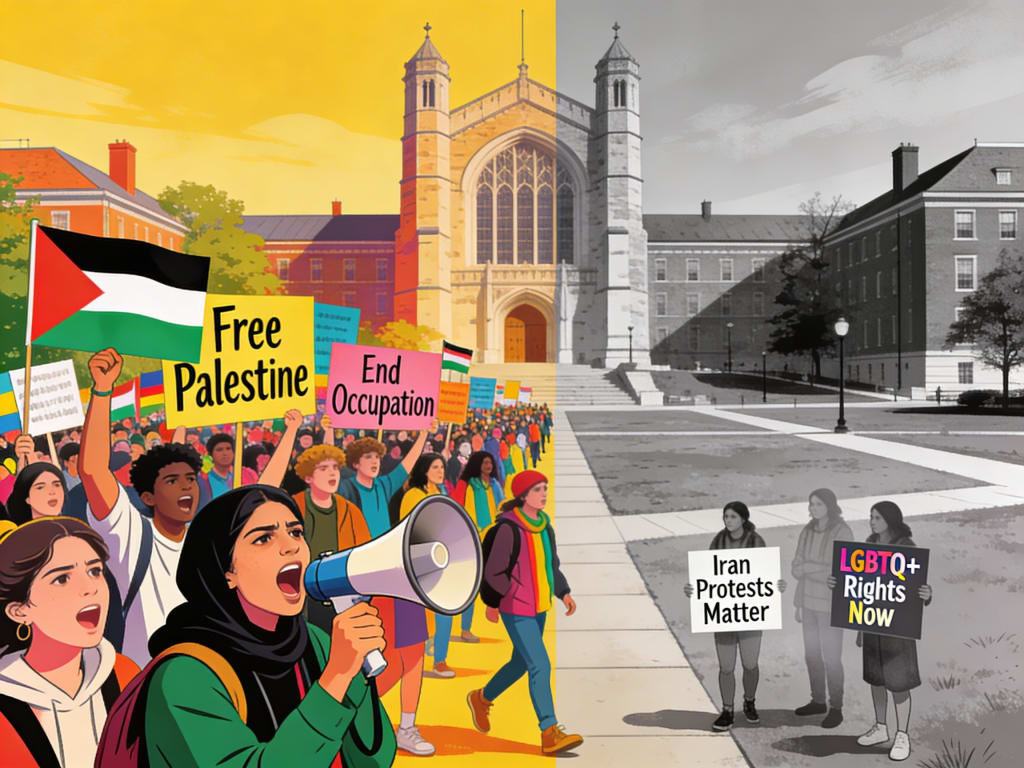
Contemporary Western progressive silence on Iran stems from several intersecting factors that operate both consciously and unconsciously:
Anti-imperialism overrides other concerns: For many Western leftists, the primary political framework centres on opposing American and Western European imperialism. In this worldview, countries that position themselves against US hegemony, including Iran, Syria, Venezuela, and Cuba, receive a degree of moral immunity. Criticising Iran is seen as “playing into the hands” of American foreign policy hawks who want military intervention or regime change. The calculation becomes: “The enemy of my enemy is my friend.” Since Iran opposes the United States and Israel, and since these activists view the US and Israel as the primary sources of global injustice, criticising Iran feels like supporting the “greater evil.” The LGBTQ+ people being hanged from cranes, and the women being beaten for loose headscarves, disappear from this geopolitical algebra entirely.
+ Read more: The hidden face and fall of Nicolás Maduro: Anatomy of a criminal regime
Fear of Islamophobia accusations: There exists legitimate concern about anti-Muslim bigotry in Western societies. Following the 11 September 2001 attacks, Muslims in Europe and North America faced discrimination, surveillance, hate crimes, and political scapegoating. Progressive movements rightly pushed back against this xenophobia. However, this anti-racism has, in some quarters, evolved into a reluctance to critique any government or movement that identifies as Islamic, even when its practices flagrantly violate the human rights principles these progressives claim to champion. Pointing out that the Iranian government executes gay people or forces women to veil becomes conflated with anti-Muslim bigotry, despite the fact that millions of Muslims worldwide oppose such practices with great passion and courage. As a result, discussions of Iranian human rights abuses get muted or avoided entirely in progressive spaces.
Epistemological relativism: Certain strands of postmodern and postcolonial theory, popular in Western universities, emphasise cultural relativism and critique “universal human rights” as a Western imposition on non-Western societies. While these theories offer valuable insights about power dynamics and historical context, their misapplication can lead to a paralysing inability to condemn obvious abuses. The argument becomes: “Who are we to judge another culture’s practices? Isn’t the concept of individual rights itself a Western construct?” This philosophical stance, taken to its extreme, renders activists unable to support Iranian feminists and LGBTQ+ people because doing so might constitute “cultural imperialism.” It is a position of remarkable convenience for those who are not themselves facing execution.
Media gatekeeping and access: Western journalists face substantial barriers to reporting from inside Iran. The Islamic Republic severely restricts foreign press, monitors their activities, and revokes visas for critical coverage. As veteran British journalist Jon Snow admitted when asked how his Channel 4 news team secured access to Iranian officials: “They whistle, and we go.” In other words, Western media outlets that want to maintain access to Iran must toe the regime’s line to some degree. This creates reporting that amplifies government narratives while marginalising dissident voices. When coverage becomes regime-filtered, Western audiences don’t see the full picture of oppression, making it easier for the issue to fade from public consciousness.
The Iranian diaspora and human rights activists have repeatedly expressed frustration with Western media’s coverage. Rachel O’Donaghue of HonestReporting UK noted that some outlets have gone beyond simply ignoring the protests to actively “reframing” them using the regime’s own talking points, describing demonstrators as “rioters” and emphasising government claims about foreign interference. This reframing is not accidental. It reflects the structural dependency that media access creates.
Double standards in academic discourse: Universities that host events about Palestinian rights, Venezuelan socialism, or Cuban healthcare often show little interest in platforming Iranian dissidents. Academic conferences on Middle Eastern studies dedicate panels to examining US interventionism but rarely scrutinise the Islamic Republic’s human rights record with comparable rigour. This disparity became particularly visible during the 2022 Woman, Life, Freedom protests. While some solidarity actions occurred, including beach demonstrations in Rio de Janeiro and social media campaigns, they paled in comparison to the sustained, institutional support that other causes receive in Western progressive spaces.
The digital surveillance state: Technology as instrument of oppression
The Iranian regime’s persecution of women and LGBTQ+ individuals has evolved significantly in recent years through the integration of sophisticated surveillance technology. What began as morality police patrols with vans scouring streets has transformed into an omnipresent digital system that operates continuously and without the need for human enforcers to be physically present.
Under the Noor Plan, implemented from April 2024 onwards, Iranian authorities deployed artificial intelligence, facial recognition systems, and comprehensive CCTV networks to identify women who defy compulsory veiling laws. The system works through multiple layers that reinforce and feed into each other:
Licence plate recognition: Cameras positioned throughout major cities scan vehicle licence plates and cross-reference them with national identity databases. If the system detects a woman driving without proper hijab, it automatically generates a text message warning sent to her mobile phone. The message typically includes the specific time, location, and nature of the alleged violation. There is no human officer making a judgement call. The algorithm decides, the system notifies, and the burden falls immediately on the woman to prove compliance.
Facial recognition in public spaces: Major squares, government buildings, universities, shopping districts, and transportation hubs now feature facial recognition cameras. These systems can identify individuals, cross-check their images against database photos, and flag those whose current appearance deviates from their official identification photos, which must show women in hijab. The effect is to make every public space a site of continuous monitoring.
Social media monitoring: The regime employs extensive surveillance of social media platforms, both international (Instagram, Telegram, X/Twitter) and domestic. Security services track posts, shares, and even private messages. Women who post photos showing hair or attending mixed-gender gatherings risk arrest. LGBTQ+ individuals who participate in online communities face particular danger, as the digital trail they leave can become evidence in criminal proceedings.
Digital payment tracking: The new hijab law allows authorities to impose fines through the digital payment system. Women flagged for violations find their bank accounts debited automatically. Repeat offenders face escalating financial penalties that can devastate family budgets and push households into financial crisis over what the state defines as a clothing infraction.
Vehicle confiscation: Women who receive multiple digital warnings for driving without proper hijab can have their vehicles seized. The confiscation occurs without court proceedings. Administrative authorities simply revoke registration based on surveillance data, stripping women of mobility and economic independence in a single automated action.
This technological sophistication represents a dramatic escalation from previous methods. In the 2000s and 2010s, morality police operated primarily through street patrols. Enforcement was unpredictable and often arbitrary, but it required physical presence. A woman might go days or weeks without encountering morality police, and there was always the possibility of talking one’s way out of minor violations. The Noor Plan eliminates these gaps entirely.
Surveillance is now constant, automated, and inescapable. As one Iranian woman told researchers: “You can’t hide anymore. They see everything, everywhere. Even when there’s no green van, no police officer, the cameras are watching. You receive the text message and you know they saw you, they recorded you, and now you’re in their system.” The psychological impact of ubiquitous surveillance cannot be overstated. Iranian women describe constant anxiety, checking reflections in windows and phone screens to ensure their hijab hasn’t shifted, avoiding certain areas known to have dense camera coverage, and limiting their movements even for essential errands. The surveillance does not merely punish non-compliance. It produces a form of permanent psychological imprisonment.
The price of resistance: Arbitrary detention and torture
Following significant protest movements, particularly the 2022 Woman, Life, Freedom uprising and the massive demonstrations in late 2025 and early 2026, the Islamic Republic has deployed systematic campaigns of arbitrary detention, torture, and show trials designed to terrorise the population into submission.
Statistics compiled by Human Rights Activists News Agency (HRANA) reveal the scale of repression. More than 53,000 people have been arrested in connection with recent protests, according to February 2026 reports. This figure includes hundreds of children and teenagers, prominent activists, lawyers, and journalists, teachers and labour organisers, university students and professors, and medical personnel who treated injured protesters.
The vast majority of detainees are held incommunicado, without access to family visits or independent legal counsel. Many families spend weeks or months without information about their relatives’ whereabouts, condition, or charges. This constitutes enforced disappearance under international law, a fact that international legal bodies have noted repeatedly without consequence.
Credible reports document systematic torture in detention facilities, including severe beatings and physical abuse, sexual violence against both women and men, electric shock applied to sensitive body parts, controlled drowning (waterboarding), sleep deprivation and prolonged solitary confinement, psychological torture including mock executions and threats against family members, and denial of medical care for torture-related injuries. Multiple detainees have died in custody under suspicious circumstances. Authorities typically claim natural causes, heart attacks, suicide, pre-existing conditions, but families and independent investigators have documented evidence of lethal torture that contradicts these official accounts.
Iranian state television regularly broadcasts “confessions” from detainees who appear to admit to crimes ranging from espionage to inciting violence to receiving foreign funding. These confessions are extracted under torture and duress, often scripted by security services. Detainees are threatened that their family members will be arrested and harmed unless they cooperate with these theatrical productions. The use of forced confessions serves multiple purposes: it provides propagandistic justification for harsh sentences, intimidates other potential protesters, and psychologically breaks the prisoners by forcing them to publicly denounce their own actions and beliefs.
Although Iranian law theoretically guarantees the right to legal counsel, authorities routinely invoke “Note to Article 48” of the criminal procedure code to deny independent lawyers access to clients in national security cases. The regime classifies virtually all protest-related arrests as national security matters. Detainees are assigned government-approved lawyers who function more as prosecution assistants than defence attorneys. These lawyers rarely challenge evidence, don’t call witnesses for the defence, and frequently encourage their clients to confess in exchange for vague promises of leniency that never materialise.
At least nineteen lawyers who attempted to represent protesters have themselves been arrested and detained as of February 2026, according to the Council of Lawyers for a Democratic Iran. This creates a chilling effect: lawyers who vigorously defend political prisoners risk imprisonment, making it nearly impossible for detainees to receive genuine legal representation.
To expedite prosecutions, authorities have created special branches of Revolutionary Courts dedicated exclusively to processing protest-related cases. These courts operate in the basements of detention facilities, hold hearings that last mere minutes, accept forced confessions as evidence, and issue predetermined verdicts. Saeid Dehghan, director of the Parsi Law Collective, described these proceedings to researchers: “The hearings are merely formalities, and the verdicts are prearranged. Judicial authorities abuse the provision known as Note to Article 48 to deny independent lawyers the right to represent their clients. All major cases are then sent to a specific new branch in the basement of the Revolutionary Court. Naturally, the hearings are merely formalities, and the verdicts are prearranged.”
The regime has escalated to sentencing demonstrators to death, often on charges of “corruption on earth” or “enmity against God,” vague accusations that carry capital punishment. At least thirty detained protesters face imminent risk of execution as of early 2026, including two minors.
The case of three young men in Pakdasht is particularly alarming: Matin Mohammadi and Erfan Amiri, both 17, and Ehsan Hosseinipour, 18, face possible death sentences for allegedly setting fire to a mosque and causing the deaths of two Basij militia members. Defence attorney Amir Raeisian has warned that authorities appear determined to execute these teenagers, despite international law explicitly prohibiting capital punishment for crimes committed by minors.
Many families of detained protesters face financial devastation alongside everything else. Bail amounts, when bail is even offered, reach tens or hundreds of millions of rials, well beyond the means of most Iranian families. Even if relatives can scrape together funds or sell property to post bail, defendants often face additional charges that reset the detention and bail cycle. Travel costs compound the problem. Many detainees are held far from their hometowns, forcing families to spend significant sums on transportation for court appearances they’re rarely allowed to attend. Legal fees drain family resources. Meanwhile, with primary breadwinners imprisoned, families lose income while expenses escalate. The economic destruction is not incidental. It is part of the design.
Children and teenagers: The regime’s youngest victims
Perhaps no aspect of Iran’s human rights catastrophe is more unconscionable than the targeting of children and teenagers. The Islamic Republic has demonstrated a willingness to arrest, torture, and even execute minors who participate in protests or violate moral codes. This is not a matter of isolated incidents or individual misconduct. It is systematic.
Under Iranian law, girls reach the age of criminal responsibility at nine lunar years (approximately 8.5 solar years), while boys reach it at fifteen lunar years (approximately 14.5 solar years). This means that prepubescent girls can be charged, tried, and punished as adults for a wide range of offences. This gendered disparity reveals the explicitly patriarchal foundations of the legal system. The differential age thresholds are based on traditional interpretations of Islamic jurisprudence that associate physical puberty with legal and moral responsibility, and that assume girls reach puberty earlier than boys.
The practical consequences are devastating. A nine-year-old girl who runs away from home to escape forced marriage can be criminally prosecuted. A thirteen-year-old girl who removes her hijab at school faces potential adult criminal penalties. A sixteen-year-old girl who participates in a protest can be charged with adult national security offences carrying decades in prison or even death.
More than 500 children and teenagers were arrested during the 2022 protests alone, according to human rights monitors. Many remain in detention years later. The regime makes no special accommodations for juvenile detainees: they’re held in the same facilities as adults, subjected to the same interrogation techniques, and face the same courts. Reports indicate that detained minors experience sexual violence, physical torture, and psychological abuse at rates comparable to adult detainees. Some have been denied access to education while imprisoned. Others have been coerced into signing confessions they couldn’t read or didn’t understand.
Iran leads the world in executing individuals for crimes committed when they were under eighteen years old, despite being a signatory to the Convention on the Rights of the Child, which explicitly prohibits this practice. While the legal age of majority is eighteen in Iran, judges can sentence minors to death for certain categories of crimes. These death sentences are often “held” until the individual reaches eighteen, at which point they’re executed. This represents a technical compliance with international law that violates its spirit entirely, and the international community has largely allowed the regime to get away with this particular sleight of hand.
The 2026 cases of Matin Mohammadi and Erfan Amiri, both seventeen when arrested for alleged involvement in arson, exemplify this practice. If sentenced to death, they would likely be held on death row until turning eighteen, then executed, allowing the regime to claim it doesn’t execute minors while doing exactly that.
Schools and universities have become enforcement sites for hijab compliance and political orthodoxy. Female students who attend class with improper hijab face immediate expulsion from class, suspension or permanent expulsion from school, bans from examinations, denial of graduation certificates, and reporting to police or morality police. Teachers who fail to enforce these rules face their own punishments, including termination, fines, and criminal charges. This turns educators into unwilling enforcers of repression, with their livelihoods dependent on policing children’s bodies and monitoring their political opinions.
University students face particularly intense scrutiny. Universities have installed CCTV cameras at entrances, in corridors, and even in some classrooms. Female students flagged for hijab violations are denied entrance to campus, prohibited from taking exams, or summarily expelled. Since access to higher education is prerequisite for many professional careers, these penalties effectively destroy young women’s futures before those futures have properly begun.
International law and accountability: The justice gap
The Iranian regime’s systematic persecution of women and LGBTQ+ individuals clearly violates numerous international legal instruments that Iran has ratified, including:
The International Covenant on Civil and Political Rights (ICCPR): Iran ratified this treaty in 1975. The ICCPR prohibits discrimination based on sex, guarantees equal rights of men and women, prohibits arbitrary detention and torture, and protects freedom of expression, assembly, and religion. Iran’s mandatory hijab laws, gender-discriminatory legal codes, arbitrary detention practices, and torture of prisoners violate virtually every major provision of the ICCPR.
The Convention on the Rights of the Child (CRC): Iran ratified this treaty in 1994. The CRC prohibits capital punishment for crimes committed by persons under eighteen, requires special protections for detained minors, and mandates that the best interests of the child be the primary consideration in all actions affecting them. Iran’s execution of juvenile offenders, differential age of criminal responsibility for girls, and detention of child protesters in adult facilities violate the CRC comprehensively and repeatedly.
The Convention on the Elimination of All Forms of Discrimination Against Women (CEDAW): Iran signed but never ratified CEDAW, claiming that certain provisions conflict with Islamic law. This itself is revealing. The regime acknowledges that gender equality is incompatible with its interpretation of Sharia, and it has chosen Sharia over gender equality in every case where the two have come into conflict.
Customary international law: Certain prohibitions, including torture, crimes against humanity, and genocide, are considered jus cogens norms that bind all states regardless of treaty ratification. The UN Fact-Finding Mission’s 2024 conclusion that Iran’s treatment of women constitutes “persecution on the grounds of gender” identifies a crime against humanity, triggering universal jurisdiction obligations for all signatory states.
Despite these clear violations, meaningful accountability remains elusive for several interlocking reasons:
UN Security Council paralysis: Russia and China, both permanent Security Council members with veto power, maintain close relationships with Iran and routinely block resolutions criticising the regime or imposing consequences. This means the Security Council, the body with authority to refer cases to the International Criminal Court, cannot act on Iran.
ICC jurisdiction limitations: The International Criminal Court can only prosecute individuals, not states. Iran is not a party to the Rome Statute that created the ICC, so the Court has no automatic jurisdiction over crimes committed on Iranian territory or by Iranian nationals. Prosecution would require either a Security Council referral (blocked by Russia and China) or Iranian cooperation (obviously not forthcoming).
Ineffective sanctions: Western countries have imposed various sanctions on Iranian officials and entities involved in human rights abuses. However, sanctions often prove more symbolic than substantive. Targeted individuals rarely hold assets in Western financial systems, and sanctions can be evaded through front companies, third-party transactions, and non-Western banking systems.
Diplomatic engagement paradox: Countries pursuing diplomatic engagement with Iran, whether on nuclear issues, regional conflicts, or economic matters, often soften human rights criticism to preserve those diplomatic channels. The calculation becomes: “We need Iranian cooperation on Issue X, so we can’t be too forceful about Issue Y.” This relegates women’s rights and LGBTQ+ persecution to secondary status in international diplomacy, precisely at the moments when vocal, consistent pressure might make the most difference.
Lack of documentation: The regime’s restrictions on international human rights monitors, journalists, and investigators make comprehensive documentation of abuses difficult. While diaspora activists, local human rights groups, and international organisations do extraordinary work collecting evidence, gaps remain. The regime exploits these gaps to deny abuses or claim that reports are exaggerated propaganda, and it does so knowing that the international community lacks the political will to press the matter.
Realpolitik calculations: Many governments make foreign policy decisions based primarily on security and economic interests rather than human rights. Countries that purchase Iranian oil, cooperate on regional security matters, or maintain extensive trade relationships prioritise these interests over human rights advocacy. The women and LGBTQ+ individuals paying the price for these calculations are not present at the negotiating table.
The Woman, Life, Freedom movement: Resistance against all odds
Despite the overwhelming repressive apparatus, Iranian women and LGBTQ+ individuals continue to resist in ways both large and small. The Woman, Life, Freedom movement that erupted after Mahsa Amini’s death represents the most significant challenge to the Islamic Republic since its founding, and its significance extends far beyond the street protests that the regime was eventually able to suppress.
Unlike previous protest movements in Iran, including the 2009 Green Movement that questioned election results, the 2017 to 2018 economic protests, and the 2019 demonstrations against fuel price increases, the Woman, Life, Freedom uprising explicitly called for the overthrow of the Islamic Republic itself. Slogans like “Death to the dictator” and “Death to Khamenei” became commonplace, a rhetorical escalation that previous movements had largely avoided. The protesters were not asking for reform within the system. They were rejecting the system’s right to exist.
The protests were notable for several interconnected features. Women, particularly young women, stood at the forefront of demonstrations. They removed and burned hijabs in public, cut their hair in acts of mourning and defiance, and faced down riot police armed with nothing more than courage and smartphones to document the violence. Protests spread to all thirty-one provinces of Iran, encompassing cities large and small, Persian and minority-ethnic areas, religious and secular regions. This geographic distribution demonstrated that discontent with the regime transcended regional and ethnic divisions in ways that had not been seen before.
Generation Z Iranians, those born after 2000 who have no memory of the 1979 revolution, drove much of the protest activity. They had no patience for the regime’s ideological justifications, no fear of questioning religious authority, and no hesitation about demanding systemic change rather than mere reforms. They were the first generation for whom the Islamic Republic was not a revolutionary achievement but simply the oppressive air they had always breathed, and many of them had decided they were done breathing it.
Protesters adapted sophisticated tactics to evade regime surveillance and suppression: bringing spare clothes to replace painted or identifying garments, wearing masks and goggles against tear gas and for anonymity, dismantling public security cameras, chanting from windows and rooftops to avoid street-level violence, using VPNs and encrypted messaging apps to coordinate despite internet blackouts, dyeing public fountains red to symbolise blood, and “turban throwing,” knocking the turbans off of clerics and running away.
Beyond traditional marching and chanting, demonstrators engaged in creative resistance that captured international attention. Women posted videos of themselves walking uncovered through public spaces. Schoolgirls removed head coverings en masse in classrooms. Young people danced in public to banned music. These acts of everyday defiance challenged the regime’s claim to control Iranian society at its most fundamental level, demonstrating that the Islamic Republic’s authority existed only as long as the population consented to perform submission.
The protests brought together Iranians across class lines, university students and working-class youth, bazaar merchants and factory workers, Tehran professionals and provincial farmers. Ethnic minorities, Kurds, Baluchis, Azeris, and Arabs, participated actively, with Kurdish areas experiencing some of the most intense demonstrations and harshest crackdowns. The movement’s breadth was its greatest threat to the regime, because the regime has always relied on dividing Iranians against each other.
By spring 2023, the mass street demonstrations had largely subsided, though they never completely ceased. The combination of extreme violence, mass arrests, show trials, and executions succeeded in driving protesters off the streets, at least temporarily. The regime claimed victory, declaring it had defeated foreign-backed rioters and preserved Islamic values. But this surface “calm” masked ongoing resistance and fundamental changes in Iranian society that could not be undone.
Despite escalating punishments, millions of Iranian women now regularly appear in public without proper hijab or without hijab entirely. In northern Tehran, upscale shopping districts, and major cities like Isfahan and Shiraz, women walking with uncovered hair have become common enough that observers describe it as a “new normal.” This represents a profound social transformation. Even during the reform presidency of Mohammad Khatami in the late 1990s and early 2000s, when enforcement relaxed, most women continued wearing hijab out of social conformity even when they disagreed with the law. Today’s mass non-compliance indicates that regime legitimacy has eroded to the point where millions no longer feel compelled to perform submission even without active protest.
Iranians engage in countless daily acts of refusal that, while individually small, collectively undermine regime authority: women removing hijabs the moment they step outside Iran, young people consuming banned cultural products through VPNs, families refusing to report “moral violations” by neighbours or relatives, businesses subtly declining to enforce hijab requirements, government employees doing the minimum necessary to maintain employment while mentally checking out from regime ideology.
Highly educated Iranians, particularly women and LGBTQ+ individuals, are fleeing the country in unprecedented numbers. Those who can obtain visas to Western countries, Turkey, or elsewhere are leaving. This represents catastrophic brain drain. Doctors, engineers, scientists, artists, and entrepreneurs are departing permanently. The regime has created a perverse feedback loop: repression drives out the most educated and capable citizens, weakening the economy and society, which generates further discontent, leading to more repression, prompting additional emigration. This cycle accelerates Iran’s decline while removing the very people who might contribute to its revitalisation.
Perhaps most significantly, an entire generation of young Iranians has fundamentally rejected the Islamic Republic’s legitimacy. They don’t seek reform within the system. They want the system dismantled. They don’t debate whether hijab should be mandatory or optional. They reject the premise that government should regulate personal appearance at all. When current teenagers and twenty-somethings become the majority of Iranian adults over the next two decades, the political landscape will inevitably shift, either through internal transformation or revolutionary upheaval. The regime knows this, and the knowledge appears to be making it more desperate rather than more willing to adapt.
The future: Uncertain liberation
The death of Supreme Leader Ayatollah Ali Khamenei in early 2026, the event that prompted the celebration in Tehran’s streets described at this article’s beginning, creates an uncertain moment for Iran’s future. Khamenei’s thirty-seven-year tenure as Supreme Leader represented continuity with Khomeini’s original revolutionary vision. His death necessarily forces succession questions and potential power struggles within the regime’s elite.
Several scenarios might unfold. The Assembly of Experts, a body of eighty-eight clerics, might select another hardline conservative as Supreme Leader, perhaps in the mould of current President Ebrahim Raisi. The regime’s essential character would remain unchanged, with ongoing repression of women and LGBTQ+ individuals. This represents the establishment’s preferred outcome.
Alternatively, competition between regime factions, conservative clerics, Islamic Revolutionary Guard Corps commanders, and traditional politicians, could create instability. Different factions might promise varying degrees of social liberalisation to gain popular support, but ultimate outcomes would remain uncertain. Power struggles could result in either modest reforms or even harsher crackdowns depending on which faction prevails.

A more moderate figure emerging as Supreme Leader and genuinely attempting to reform the system, relaxing social restrictions including mandatory hijab, releasing political prisoners, and reducing sentences for moral violations, seems least likely given the Assembly of Experts’ composition and the entrenchment of conservative interests in security services. But it cannot be entirely dismissed. Regimes have surprised observers before.
Khamenei’s death and the succession process could alternatively create an opportunity for renewed mass protests, potentially larger and more sustained than 2022’s movement. If security forces fracture in their loyalties or prove unable to suppress demonstrations, the regime could collapse, leading to either democratic transition or chaotic power vacuum. History offers no guarantee that the collapse of one authoritarian system produces something better.
What the international community can do, regardless of which scenario unfolds, falls into several categories. Diplomatic isolation, recalling ambassadors from Tehran and downgrading diplomatic relations until human rights conditions improve substantially, would signal that normalised relations require ending executions, releasing political prisoners, and repealing discriminatory laws. Targeted sanctions on specific officials involved in human rights abuses, judges who sentence protesters to death, commanders who order shootings of demonstrators, and morality police leadership, would impose real personal costs for individual decisions.
The regime’s most effective repression tool is internet blackouts that isolate Iranians from each other and the world. Western governments and technology companies should prioritise providing Iranians with censorship-resistant internet access through satellite systems, VPN support, and other technologies that have already proven their value during protest periods.
Western governments should expedite asylum applications for Iranian women and LGBTQ+ individuals fleeing persecution, create humanitarian visa categories specifically for those at risk, and refuse to deport Iranians to face potential torture or execution. International media should consistently cover Iran’s human rights situation, not just during dramatic protest moments but as ongoing crisis. Platforming Iranian dissident voices, particularly women and LGBTQ+ activists, should be treated as a journalistic and ethical obligation rather than an optional editorial choice.
While Security Council action faces vetoes, creative legal strategies might establish accountability mechanisms, perhaps a Special Tribunal for Iran similar to those created for Yugoslavia, Rwanda, or Sierra Leone. Universal jurisdiction prosecutions in national courts for crimes against humanity represent another avenue that has been underutilised. Funding Iranian human rights organisations, both inside the country and in diaspora, sustains the documentation work that keeps the international record alive. And severe economic sanctions, while carefully avoiding humanitarian goods, should make clear that access to global markets requires respecting human rights.
Conclusion: The weight of witness
The systematic persecution, torture, and murder of women and LGBTQ+ individuals in Iran represents one of the most egregious ongoing human rights catastrophes in the contemporary world. What makes it particularly unconscionable is that it occurs not in wartime chaos or failed state collapse, but as deliberate policy of a functioning government that claims moral and religious authority over every aspect of its citizens’ lives.
The Islamic Republic has constructed an elaborate theological-legal-social apparatus whose primary purpose is controlling the most intimate aspects of human existence: how people dress, whom they love, how they express gender, what they believe. This apparatus enforces conformity through a sophisticated combination of surveillance technology, arbitrary detention, torture, forced confession, show trials, and execution, all justified through selective interpretations of religious texts that millions of Muslims worldwide reject entirely.
For women, the message is clear: your body belongs not to yourself but to the state, which will dictate your clothing, your movements, your relationships, your education, your employment, and ultimately your death should you resist. The virginity examinations, the pre-execution rapes, the honour killings receiving minimal punishment, these aren’t aberrations but features of a system designed to reduce women to property.
For LGBTQ+ individuals, the message is even starker: you have no right to exist as you are. The only options are forced surgical “correction,” exile, or death. Even family provides no refuge when honour requires killing queer relatives to preserve reputation. The state has structured its laws to make the family itself a weapon against its most vulnerable members.
Yet despite this overwhelming repression, Iranians resist. Women walk unveiled through Tehran’s streets knowing they risk arrest. Gay men maintain relationships despite the gallows. Transgender individuals refuse unwanted surgeries despite government pressure. Protesters face down bullets and torture to demand freedom. This resistance is not reckless. It is a considered refusal to surrender human dignity, conducted at extraordinary personal cost by people who understand perfectly well what the regime is capable of.
The Woman, Life, Freedom movement may have been driven from the streets by superior violence, but it succeeded in delegitimising the regime in the eyes of its own population, particularly youth. The Islamic Republic survives through coercion, not consent, and no government can indefinitely rule a hostile population through force alone. History has never produced a single example of such a project succeeding in the long run.
When the Iranian people finally achieve the freedom they’ve fought for across decades, and history suggests they will, the world will remember who stood with them and who stood silent. It will remember which governments prioritised geopolitical expedience over human rights, which activists selectively applied their principles, and which media outlets amplified regime propaganda while ordinary Iranians bled in the streets.
Iranians themselves will remember the Western progressives who marched for every cause except theirs. They will remember the diplomats who shook hands with their oppressors. They will remember the silence when they needed solidarity most. But they will also remember those who bore witness, who documented the crimes, who amplified their voices, and who refused to look away. In that remembering lies both accountability for the past and hope for the future.
The people celebrating in Tehran’s streets at news of Khamenei’s death weren’t celebrating death itself. They were celebrating the possibility of life. Life without fear. Life without police measuring your veil. Life without wondering if your sexuality will get you hanged. Life as a human being with dignity, autonomy, and rights that no theocratic state can revoke.
That possibility, purchased with the blood of thousands of martyrs and the courage of millions of resisters, is what makes Iran’s story not just a catalogue of horrors but a testament to human resilience. The Islamic Republic has proven that theocracy, patriarchy, and authoritarianism can inflict tremendous suffering. But Iranian women and LGBTQ+ individuals have proven that the human spirit can endure, resist, and ultimately prevail.
Their freedom, when it comes, will be their own achievement. But the rest of us bear responsibility for whether we helped or hindered, whether we stood with the oppressed or accommodated the oppressors, whether we spoke truth or remained silent.
As the great Iranian poet Rumi wrote centuries ago: “The wound is the place where the Light enters you.” Iran has been wounded deeply, but light is entering. The question for the international community is whether we will help widen that opening or allow darkness to close it once again.
This article is based on documentation from Amnesty International, Human Rights Watch, the UN Fact-Finding Mission on Iran, Iran Human Rights, the Iranian Kurdistan Human Rights Watch, 6Rang, and numerous other human rights organisations, as well as testimony from survivors and activists. For more information on Iran’s human rights situation and how to support Iranian civil society, visit reputable organisations dedicated to documenting these abuses and advocating for justice.