In an era where football rivals can display more sportsmanship than political opponents, we’ve stumbled into a rather absurd paradox. Whilst we expect healthy rivalry and team spirit in a simple game between Manchester United and Liverpool, the same civility seems utterly absent from debates that determine our nation’s future. We’ve created a world where sporting rivals embrace after matches, yet political opponents treat each other as existential threats. This inversion of priorities reveals a fundamental misunderstanding of what truly matters for our collective survival. Societal polarization has become the defining crisis of our time, silently eroding the very democratic principles we claim to cherish whilst we remain blissfully unaware of the mounting costs.
How much longer will society take to realize that living in incessant battles between dualities is the recipe for collective failure?
The evidence is staggering and frankly quite alarming. Recent studies spanning 139 countries reveal that political polarization directly depresses economic growth, reduces capital formation, and drives away foreign investment. Meanwhile, research tracking democratic health globally shows that over 50% of countries experiencing pernicious polarization have suffered significant democratic backsliding. We’re not merely witnessing heated political debates; we’re watching democracy systematically dismantle itself from within, one tribal battle at a time.
Political polarization in 2024 has reached unprecedented levels globally, with 47% of democracies experiencing significant democratic decline in 2023 alone. The data paints a sobering picture: political division is no longer just a social inconvenience but an existential threat to democratic institutions and economic prosperity worldwide. From Germany’s alarming political violence ahead of the 2025 elections to Spain’s increasingly fragmented parliamentary system, the crisis transcends borders and ideological boundaries.
Understanding the breadth of our divisions
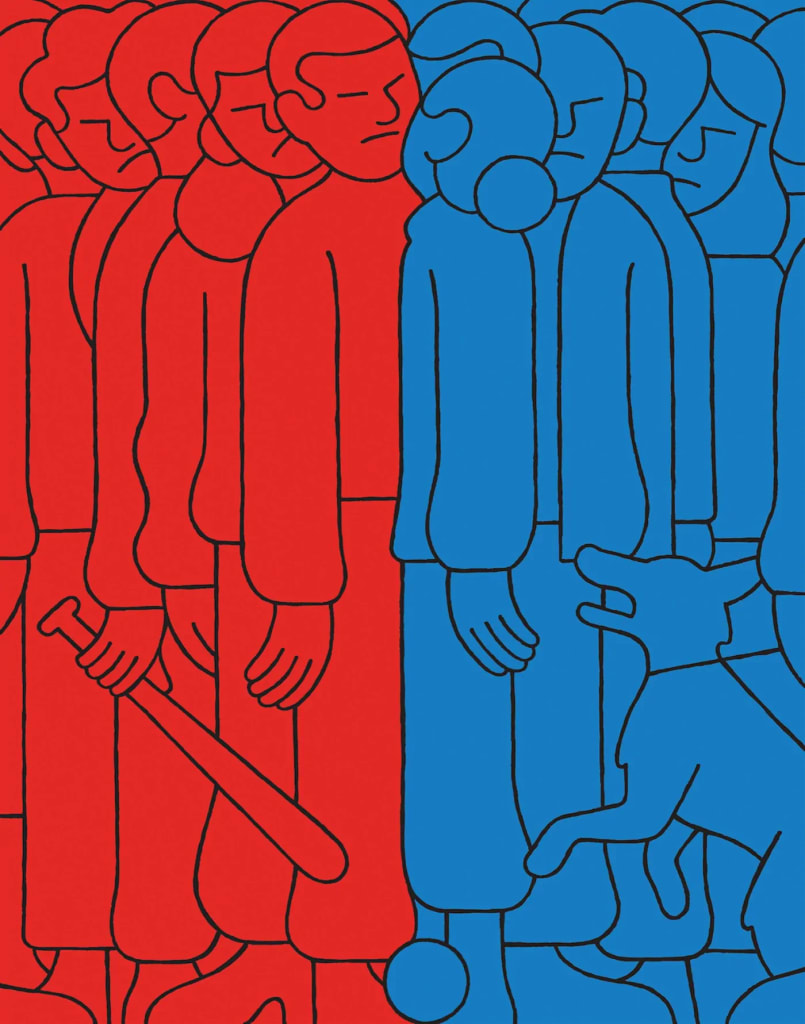
The sheer scope of societal division today is breathtaking in its comprehensiveness. We’ve managed to weaponise virtually every aspect of human identity and experience. Urban versus rural, conservatives versus progressives, religious versus secular… these aren’t mere policy disagreements anymore; they’ve evolved into existential tribal warfare.
Yet the list of fractures runs far deeper than traditional political categories. White versus Black, heterosexual versus LGBTQ+, men versus women, nationals versus immigrants, rich versus poor, employers versus employees… each division represents another fault line threatening to tear the social fabric apart. We’ve created opposing camps for traditionalists versus modernists, Christians versus Muslims, believers versus atheists, cisgender versus transgender, binary versus non-binary, normative versus queer.
The polarization extends into media consumption with traditional media versus social networks, environmental policy with conservationists versus developmentalists, and cultural discourse with cancel culture proponents versus those cancelled, woke versus anti-woke. Economic divisions pit property owners versus renters, investors versus the indebted. Regional tensions separate northeast from south, city centers from peripheries. Generational conflicts divide Baby Boomers from Millennials and Gen Z. Criminal justice debates split rehabilitation advocates from punishment supporters. Even the role of government becomes a battleground between interventionist state versus minimal state advocates, police versus communities.
Each of these divisions represents a failure of democratic imagination. We’ve transformed legitimate differences of perspective into tribal warfare, forgetting that democracy’s genius lies not in eliminating diversity but in harnessing it. The various social tribes must learn to recognize their respective weaknesses and strengths, to unite with those who are different and add rather than subtract from collective potential.
The irony is painful: people claim to want democracy whilst systematically violating its essential principles, thereby destabilizing it. Defending only your unique way of thinking is easy. This has been done even when particular ways of thinking or acting are demonstrably wrong. But that isn’t democracy. Democracy is knowing how to live well together with those who are different, where polarity isn’t cultivated but rather rejected.
Consider the increasingly absurd reality: Americans now hesitate to let their children marry someone from the opposing political party, with nearly half of both Democrats and Republicans expressing such concerns. In Europe, similar patterns emerge, with citizens avoiding business relationships, friendships, and even neighbourhoods based on political affiliation. This goes far beyond healthy democratic discourse; it represents a fundamental breakdown of social cohesion.

The transformation is particularly striking when we examine how political identity has become a “super-identity” that organises all other aspects of life. Progressive ideology now correlates with urban living, cycling, and organic food consumption, whilst conservative beliefs align with traditional activities like hunting and suburban living. We’ve essentially sorted ourselves into completely separate ways of existing, making meaningful dialogue increasingly impossible.
Affective polarization has intensified dramatically, with emotional hostility between political groups now exceeding actual policy disagreements. Research shows that partisan animosity has grown stronger than racial, religious, or class-based divisions in many Western democracies. People don’t just disagree with opposing political views anymore; they actively despise those who hold them, viewing them as threats to society’s very foundation.
This social fragmentation manifests in everyday decisions about where to live, work, shop, and socialize. Neighborhoods are increasingly sorted by political preference, creating geographic echo chambers that reinforce existing beliefs. Schools, churches, and community organizations find themselves navigating ideological minefields, often fragmenting along political lines rather than serving as spaces for diverse community interaction.
The psychological architecture of division
The tribal brain in modern times
Our current predicament stems largely from evolutionary psychology meeting 21st-century technology. The tribal instincts that once helped our ancestors survive in small hunter-gatherer groups now wreak havoc in complex modern societies. We possess three fundamental tribal instincts: the peer instinct (copying those around us), the hero instinct (emulating high-status individuals), and the ancestor instinct (preserving traditions).
These instincts served us brilliantly for millennia, enabling unprecedented cooperation and cultural evolution. However, when transplanted into today’s digital landscape, they become engines of division. The same psychological mechanisms that once helped us identify threats and coordinate group responses now trap us in ever-narrowing echo chambers.
Us versus them politics exploits these deep-seated psychological patterns. Our brains are wired to categorize the world into in-groups and out-groups, a survival mechanism that helped our ancestors navigate complex social environments. In the modern political arena, this instinct transforms policy disagreements into moral crusades, where opposing viewpoints aren’t just wrong but evil. Politicians and media figures who understand this psychology deliberately frame issues in tribal terms, knowing it triggers powerful emotional responses that override rational deliberation.

Research in tribal psychology reveals how our brains create “majestic clannish selves”… inflated self-images where our group becomes inherently superior, intelligent, and virtuous whilst the other side represents everything wrong with the world. This isn’t conscious bias; it’s hardwired programming that made perfect sense when survival depended on group loyalty but becomes destructive in pluralistic democracies.
The psychological costs of constant tribal conflict are substantial. Studies document increased anxiety, depression, and stress-related illnesses correlated with high levels of political engagement in polarized environments. People experience genuine psychological distress when confronted with opposing viewpoints, triggering fight-or-flight responses more appropriate for physical threats than policy debates. This chronic stress state damages both individual wellbeing and collective capacity for rational problem-solving.
Understanding these tribal instincts should humble us, not excuse us. Yes, our brains are wired for in-group preference, but we are not slaves to our evolutionary programming. The same cognitive flexibility that allowed humans to build civilizations can enable us to transcend destructive tribalism. The question is: when will people learn to truly live in democracy? When will we develop the maturity to recognize that our opponents aren’t enemies but fellow travelers struggling with the same human condition?
The digital amplification machine
Social media algorithms have inadvertently become polarization’s most effective allies. Despite widespread belief in filter bubbles and echo chambers, the reality is more nuanced yet equally concerning. Facebook usage actually increases information source diversity whilst simultaneously pushing users toward more partisan sites… a fascinating paradox that intensifies both exposure and extremism simultaneously.
The problem isn’t simply that we’re seeing less diverse information; it’s that algorithms optimise for engagement, and nothing drives engagement quite like outrage. Social media platforms have essentially gamified political discourse, rewarding the most inflammatory content with greater reach and visibility. The result is a vicious cycle where moderate voices are drowned out by increasingly extreme positions designed to capture attention.
Research demonstrates that participants exposed to ideologically agreeable content find fake news significantly more believable than those receiving diverse perspectives. This “confirmation bias amplification” means we’re not just dividing into separate tribes; we’re creating entirely separate realities based on fundamentally different “facts.”
The 2024 data reveals the accelerating nature of this crisis. Platform algorithms have become increasingly sophisticated at identifying and exploiting psychological vulnerabilities, creating personalized content streams that maximize engagement through emotional manipulation. Studies tracking user behavior patterns show that exposure to polarizing content increases by an average of 15% annually, with particularly sharp increases during election cycles.
Content moderation efforts, while well-intentioned, often backfire by creating martyrdom narratives that further entrench tribal identities. When platforms remove extreme content, supporters perceive it as persecution, strengthening group cohesion and driving migration to more radical platforms. This creates a fragmentation effect where the most extreme voices become increasingly isolated from mainstream discourse, making eventual reconciliation even more difficult.
The steep price of perpetual conflict
Economic devastation hidden in plain sight
The economic costs of political polarization are both massive and largely invisible to public discourse. Comprehensive analysis across 139 countries reveals that a one standard deviation increase in polarization leads to a 1.3 percentage point decline in GDP growth and a 2.3 percentage point reduction in capital growth. For advanced economies, this translates to hundreds of billions in lost prosperity annually.
The polarization economic cost manifests through multiple channels that compound over time. Policy uncertainty created by frequent government changes and ideological swings discourages long-term business investment. Companies delay hiring and capital expenditure decisions when they cannot predict the regulatory environment beyond the next election cycle. This hesitation ripples through the economy, suppressing innovation, productivity gains, and employment growth.
Political division investment patterns reveal how global capital flows respond to democratic instability. Foreign direct investment drops precipitously in countries experiencing high polarization, as international investors perceive governance risk comparable to economic crises or armed conflicts. Portfolio investments similarly retreat, increasing borrowing costs for both governments and private enterprises. This capital flight disproportionately harms emerging economies, creating a vicious cycle where polarization drives away the investment needed for development, which in turn fuels further political discontent.
The mechanisms are straightforward yet devastating. Polarized societies struggle to maintain policy consistency, creating uncertainty that discourages investment. Foreign investors, in particular, view extreme polarization as a risk factor comparable to economic instability or political violence. The result is a “hidden tax” on economic growth that compounds over time, leaving entire generations poorer than they would have been under more collaborative governance.
Labor market dynamics deteriorate under sustained polarization. Partisan discrimination in hiring and promotion reduces economic efficiency by prioritizing political loyalty over competence. Brain drain accelerates as talented individuals emigrate from highly polarized societies, seeking more stable environments for their careers and families. Human capital formation suffers as educational institutions become political battlegrounds rather than centers of learning and innovation.
Perhaps most troubling, emerging market economies and autocratic countries experience even more severe economic consequences, including capital flight and reduced foreign direct investment. This suggests that polarization’s economic costs disproportionately harm the most vulnerable populations globally.
Infrastructure development stalls as polarized legislatures cannot agree on major projects, leaving critical investments in transportation, energy, and communications unmade. Public goods provision deteriorates when every policy decision becomes a partisan battle, with essential services like healthcare, education, and environmental protection held hostage to political positioning. The cumulative effect is an economy that consistently underperforms its potential, leaving citizens poorer and more frustrated… conditions that ironically tend to fuel further polarization.
Democratic institutions under siege
Democracy requires what political scientists call “mutual toleration”… the recognition that political opponents are legitimate competitors rather than existential enemies. Pernicious polarization systematically destroys this foundation, transforming adversaries into enemies who must be vanquished rather than negotiated with.
The data on democratic backsliding is genuinely alarming. Of 52 episodes of extreme polarization studied globally, 26 countries (50%) experienced significant democratic decline, with 23 descending into various forms of authoritarianism. Countries like Hungary, Poland, Turkey, and India demonstrate how polarization creates a permission structure for authoritarian behaviour, as supporters tolerate increasingly illiberal actions to prevent the “other side” from gaining power.
The democracy crisis 2024 manifests through concrete institutional degradation. Electoral integrity faces unprecedented challenges as polarized populations increasingly question voting legitimacy. Partisan gerrymandering reaches extreme levels, with district boundaries drawn to maximize political advantage rather than represent communities. Voter suppression tactics become normalized, justified as protecting against fabricated fraud threats. Election administration itself becomes politicized, with partisan actors placed in positions previously reserved for neutral professionals.
Judicial independence erodes as courts become viewed through partisan lenses. Appointments to constitutional courts and supreme tribunals transform into political battles, with nominees selected primarily for ideological reliability rather than legal expertise. Once appointed, judges face intimidation campaigns when their rulings displease partisan factions. This politicization undermines public confidence in legal institutions, creating situations where court decisions are accepted or rejected based purely on whether they favor one’s political tribe.
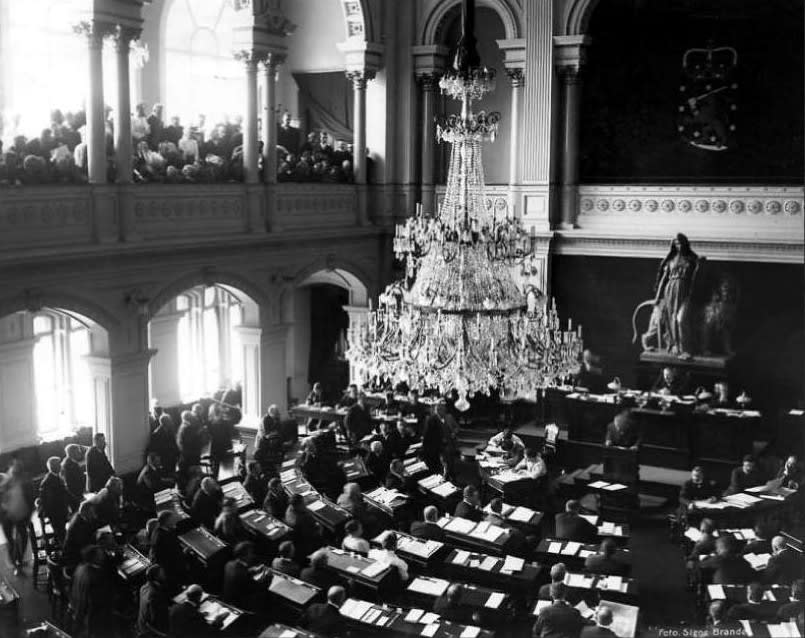
Democratic institutions threat extends to legislative dysfunction. Polarized parliaments cannot perform basic governance functions like passing budgets or confirming appointments. Routine procedural mechanisms become weapons for partisan warfare, with filibusters, boycotts, and procedural obstruction paralyzing legislative business. Coalition-building becomes impossible as compromise itself is stigmatized as betrayal. The result is governance paralysis that makes democratic institutions appear incompetent and ineffective, further eroding public faith in democracy.
This process typically follows a predictable pattern: political leaders exploit real grievances, cast opponents as threats to the nation, and gradually dismantle democratic norms and institutions whilst claiming to protect democracy. The tragedy is that citizens often support these measures, believing they’re defending democratic values against enemies who would destroy them first.
Media freedom contracts under polarization’s pressure. Independent journalism becomes increasingly difficult as outlets face economic pressure to choose partisan sides that ensure audience loyalty and revenue. Journalists reporting uncomfortable truths about any political faction face harassment, legal threats, and violence. State media in many countries transform into propaganda arms, whilst private outlets splinter into competing reality-generating machines serving different political tribes.
Civil service professionalization breaks down as public administration becomes patronage-driven. Career bureaucrats with institutional knowledge and professional standards get replaced by political loyalists lacking expertise but possessing partisan credentials. This hollowing out of state capacity means governments become less effective at delivering services, creating another feedback loop where institutional failure drives cynicism that polarization exploits.
The collapse of social trust
Beyond political and economic costs, polarization inflicts profound damage on social cohesion. Social trust… the basic assumption that most people are generally decent and trustworthy… has plummeted in polarized societies. This erosion creates cascading effects throughout society, from reduced civic participation to increased crime rates and decreased economic cooperation.
Research reveals that polarized societies experience increased discrimination in employment, housing, and social relationships based on political affiliation. People actively avoid living near, working with, or socialising with supporters of opposing political parties. This voluntary segregation creates self-reinforcing cycles of misunderstanding and hostility.
Social cohesion building becomes nearly impossible when basic human interactions are filtered through political identity. Community organizations that once bridged social divides find themselves unable to maintain diverse memberships. Sports leagues, hobby groups, and volunteer organizations fracture along political lines or avoid any topics remotely connected to politics, impoverishing civic life. Religious congregations split as theological disputes become proxies for political battles, destroying communities that took generations to build.
Family relationships suffer devastating impacts. Political disagreements rupture bonds between parents and children, siblings, and extended family members. Holiday gatherings transform from celebrations into dreaded confrontations or require elaborate rules about forbidden topics. Marriages strain under political disagreements, with divorce rates correlating with political polarization levels. These intimate damages represent polarization’s most painful costs, destroying the very relationships that provide meaning and support in human lives.
Neighborhood cohesion deteriorates as political yard signs and symbols become territorial markers. Residents avoid interactions with neighbors displaying opposing political affiliations, transforming residential areas from communities into collections of isolated households. Local disputes over noise, property boundaries, or neighborhood amenities escalate into political conflicts, making resolution nearly impossible. This breakdown of informal social networks means people lack support systems during personal crises, increasing isolation and mental health problems.
Voluntary cooperation essential for community wellbeing becomes casualty to political suspicion. Volunteer fire departments, neighborhood watches, and community improvement projects struggle to maintain participation when members cannot work together across political divides. Charitable giving becomes increasingly partisan, with donors directing resources primarily to causes aligned with their political identity rather than greatest community need. This politicization of altruism reduces overall social welfare whilst increasing inequality.
The human cost beyond statistics
Behind every percentage point of GDP decline, every democratic institution weakened, every social bond severed, there are real people suffering real consequences. Children growing up in homes where family members won’t speak because of political differences. Workers passed over for promotions because their social media reveals the ‘wrong’ political affiliation. Communities unable to address local problems because every issue becomes a proxy battle in culture wars.
This is the true price of polarity: not just what we lose in measurable terms, but what we never allow ourselves to become. How many brilliant collaborations never happen because potential partners are on opposite sides of artificial divides? How many innovative solutions remain undiscovered because we refuse to combine insights from different perspectives? How much human potential is wasted in endless conflict rather than directed toward shared flourishing?
The recipe for collective failure isn’t mysterious: it’s living in incessant battles between dualities whilst pretending these fights represent principle rather than tribalism.
Breaking free: the path to democratic renewal
Reclaiming the art of compromise
The solution to our polarization crisis begins with rehabilitating compromise… a concept that’s somehow become synonymous with weakness or betrayal rather than democratic wisdom. Historical analysis of successful democratic transitions reveals that compromise isn’t capitulation; it’s the recognition that in pluralistic societies, sustainable solutions require incorporating multiple perspectives.
Democratic principles fundamentally depend on our ability to “agree to disagree” whilst still cooperating on shared challenges. The Founders of American democracy understood this intuitively, creating a system that required compromise and collaboration between competing interests. Their success wasn’t despite their differences but because of their willingness to find higher ground that integrated competing concerns.
Political compromise in 2024 requires acknowledging that no single group possesses complete truth or moral authority. Effective democratic renewal demands intellectual humility… recognizing that our perspectives, however passionately held, represent partial views of complex realities. This doesn’t mean abandoning convictions but rather holding them with sufficient flexibility to incorporate insights from different viewpoints.

Modern research confirms that compromise can express respect for diversity whilst enabling collective action. However, this requires moving beyond zero-sum thinking toward what researchers call “principled compromise”… finding solutions that honour core values of all parties rather than simply splitting the difference.
Democratic renewal success stories from recent years offer practical models. Several countries have managed to reduce polarization through deliberate institutional reforms and cultural shifts. Uruguay maintained stable democratic governance despite regional trends toward polarization by preserving robust multi-party coalitions and consensual policy-making traditions. Botswana sustained inclusive democratic practices through institutional designs that reward broad-based representation and discourage winner-take-all politics.
At local levels, numerous communities have successfully bridged political divides through innovative approaches. Participatory budgeting processes give citizens direct involvement in spending decisions, creating shared investment in outcomes regardless of political affiliation. Community dialogues structured around local challenges rather than national partisan issues help people recognize shared interests. Youth civic education programs teaching democratic skills and collaborative problem-solving produce generations more resistant to polarization’s appeal.
Designing democracy for difference
Overcoming social division requires intentional institutional design that rewards collaboration over conflict. This means reforming incentive structures that currently benefit extreme positions whilst punishing moderation. Electoral systems that encourage broad coalitions rather than narrow bases, campaign finance reforms that reduce the influence of the most passionate donors, and media regulations that promote accuracy over engagement can all help rebalance the playing field.
Ranked-choice voting and proportional representation systems demonstrate measurable success in reducing polarization. These electoral mechanisms force candidates to appeal beyond their core supporters, rewarding coalition-building and penalizing divisive rhetoric. Countries employing such systems consistently show lower polarization levels and more stable governance than winner-take-all alternatives.
Community-level interventions show particular promise. Research on “contact theory” demonstrates that meaningful interaction between different groups… especially when working toward shared goals… significantly reduces prejudice and increases empathy. Creating spaces for cross-cutting conversations, where people can interact based on shared interests rather than political identities, helps break down the artificial barriers that polarization creates.

Bridge-building organizations in deeply divided societies provide concrete examples of successful interventions. Programs bringing together Israeli and Palestinian youth, Protestant and Catholic communities in Northern Ireland, or urban and rural Americans demonstrate that sustained, structured interaction can overcome even deep-seated animosities. These initiatives succeed by focusing on shared humanity and common challenges rather than attempting to resolve fundamental political disagreements.
Educational approaches that emphasise intellectual humility… the recognition that our beliefs might be incomplete or incorrect… can help inoculate against tribal thinking. Teaching “steel-manning” (accurately representing opposing views before critiquing them) rather than “straw-manning” can restore the quality of public discourse whilst maintaining healthy disagreement.
Curriculum reforms incorporating perspective-taking exercises, deliberative discussion techniques, and media literacy training produce measurable improvements in students’ capacity for constructive disagreement. Universities experimenting with viewpoint diversity initiatives report reduced campus polarization and improved intellectual climate. Professional development programs teaching collaborative problem-solving skills help workers navigate political differences in workplace settings.
Media ecosystem reforms offer another critical intervention point. Public broadcasting models that emphasize factual reporting and multiple perspectives provide alternatives to partisan media bubbles. Fact-checking initiatives and media literacy campaigns help audiences develop critical consumption skills. Platform design changes prioritizing content quality over engagement metrics could reduce algorithmic amplification of polarizing material.
Leveraging tribal psychology for good
Rather than fighting against our tribal instincts, we can redirect them toward constructive ends. The same psychological mechanisms that drive division can power cooperation when properly channelled. Creating larger “superordinate identities”… shared identities that transcend tribal boundaries… helps redirect us versus them thinking toward us versus shared challenges.
This requires leadership that consciously works to expand rather than contract our sense of “us.” Instead of defining ourselves by who we’re against, effective leaders help us recognise shared values, common challenges, and interdependent fates. Research shows that when people understand that their wellbeing depends on others’ success, competitive instincts transform into collaborative ones.
Crisis moments paradoxically offer opportunities for forging larger identities. Natural disasters, public health emergencies, and external threats can temporarily bridge political divides by highlighting shared vulnerability and mutual dependence. The challenge lies in translating temporary unity into lasting cultural change through institutional mechanisms that sustain collaborative habits beyond crisis periods.
National service programs bringing together diverse citizens for common purposes demonstrate this principle in action. AmeriCorps in the United States, National Citizen Service in the United Kingdom, and similar programs globally consistently produce participants with greater political tolerance and civic engagement. Military service traditionally played this unifying role; civilian alternatives can achieve similar effects through structured collaboration on community challenges.
Sports, arts, and cultural initiatives provide additional venues for building superordinate identities. National teams competing internationally remind citizens of shared identity transcending internal divisions. Cultural celebrations highlighting historical achievements and common heritage reinforce bonds that polarization threatens. Community arts projects bringing together diverse participants to create shared works build concrete connections across social boundaries.
The democratic imperative
Democracy isn’t simply a political system; it’s a cultural practice that requires constant cultivation. True democracy means learning to live well with difference, finding strength in diversity rather than seeing it as a threat. This doesn’t mean abandoning our convictions or pretending all opinions are equally valid. It means developing the maturity to hold our beliefs strongly whilst remaining open to learning from others.
The evidence is clear: societies that successfully navigate diversity whilst maintaining cohesion consistently outperform more homogeneous alternatives economically, socially, and politically. However, this requires active commitment to democratic culture, not just democratic institutions.
We stand at a crucial inflection point. The current trajectory of increasing polarization leads inevitably toward authoritarianism, economic decline, and social fragmentation. However, the alternative… learning to disagree productively whilst cooperating on shared challenges… offers the possibility of unprecedented human flourishing.
People claim to want democracy, but they fail to uphold democracy’s essential principles, thereby unbalancing it. Defending only your unique way of thinking is easy. This has been done even when particular ways of thinking or acting are demonstrably wrong. That isn’t democracy. Democracy is knowing how to live well together with those who are different, where polarity isn’t cultivated but rather rejected.
The various social tribes must learn to recognize their respective weaknesses and strengths, to unite with those who are different and multiply rather than divide our collective potential. This isn’t naive optimism; it’s hard-headed realism about what actually works. Societies that master this art consistently outperform those trapped in zero-sum tribal warfare.
The choice is ours, but the window for making it may be narrower than we imagine. The high cost of societal polarization isn’t some distant threat; it’s the mounting bill for our collective failure to learn democracy’s most fundamental lesson: that our strength lies not in our uniformity but in our capacity to find common ground across our differences.
The time for platitudes and wishful thinking has passed. We need the same level of strategic thinking, resource allocation, and sustained commitment we’d devote to any other existential threat. Because that’s exactly what unchecked polarization represents: a threat to everything we claim to value about democratic society.
Perhaps it’s time to remember that in a football match, rival supporters can share a pint after the final whistle, celebrating the game itself even when their team loses. They understand that the competition enhances rather than threatens their shared love of sport. If we can manage that level of wisdom over a game, surely we can find ways to cooperate on the issues that actually matter for our shared future.
When will people learn to truly live in democracy? When will we recognize that the recipe for success lies not in vanquishing those who think differently but in harnessing our diversity toward common purpose? The answer must be: now, before the cost of our collective failure becomes irreversible.
The alternative… continued polarization… isn’t just politically unsustainable; it’s a form of collective madness that impoverishes us all whilst solving none of our actual problems. The high cost of polarity isn’t just what we lose; it’s what we never allow ourselves to become. Democracy demands that we learn to live well together despite our differences, recognizing that our diversity of perspectives, experiences, and values represents not a weakness to overcome but a strength to harness.
The question isn’t whether we can afford to bridge our divisions; it’s whether we can afford not to. And the answer to “when will people learn to live in democracy?” must be: starting today, starting with each of us, one difficult conversation and one act of genuine listening at a time.